Showing posts with label Croatia. Show all posts

Friday, 4 May 2018

Islands, cities and lakes: the incredible variety of Croatia

The more I travel the more I realize that I really enjoy variety in my trips. If I visit a new country, I tend to plan a visit to a couple of quaint small towns and to at least a natural wonder, or a day of culture-filled sightseeing and then a more relaxing day with some beautiful scenery as a backdrop. 

Of all the countries that I have been to, one that has a lot of variety is certainly Croatia. It has quiet islands and lively cities, history and natural beauty, gorgeous seaside towns and some of the best national parks in Europe. In other words, it is impossible to get bored.  Here's three examples of the diversity that you can find in Croatia. 


Korčula


Some people consider Korčula to be the most beautiful island in Croatia. Its cobbled streets and quaint little squares make it perfect for a day of slow exploration. I went there by ferry from Hvar for 90 kn (around 12€), leaving without hurrying in the middle of the morning and going back in the evening.


The laundry in Korcula

What I liked about Korčula is that I didn't have to run around trying to see all the sights: I could just relax and enjoy the beauty of the island. For as much as I loved Hvar, it felt at times too party-oriented, touristic and glitzy. Korcula is quite another world: the old town has many hidden quiet corners and you just need to walk in any direction to enjoy some beautiful views that are not spoilt by too many tourists. Even though Korčula is definitely on the beaten path, I find it a nice alternative to more busy islands. The food was inexpensive, 


Street in Korcula
One thing that surprised me is that Korčula claims to be the real hometown of Marco Polo, one of the most famous explorers in history. This is why everything on the island bears his name: restaurants, hotels and even a house-museum. This is curious and a bit strange, because most sources consider him Venetian by birth. The connection is that Korčula, like other towns on the coast of Croatia, used to be part of the Serenissima, the republic of Venice.


Marco Polo crazyness in Korcula


Zadar


Zadar receives fewer tourists than Dubrovnik, Split or Pula, but it's a pleasant town to spend one or two days. It looks remarkably like other towns on the Adriatic coast of Northern Italy, for example Grado or Caorle, with a nice historic center full of old churches and a long promenade by the sea.


The historical centre of Zadar


Zadar is famous for its sea organ, an art installation which works with the motion of the sea to produce music. It is a popular place to stroll at sunset time or in the evening. When the sun has set you can enjoiy the Greeting to the Sun, a system of solar panels on the ground that result in a light display.
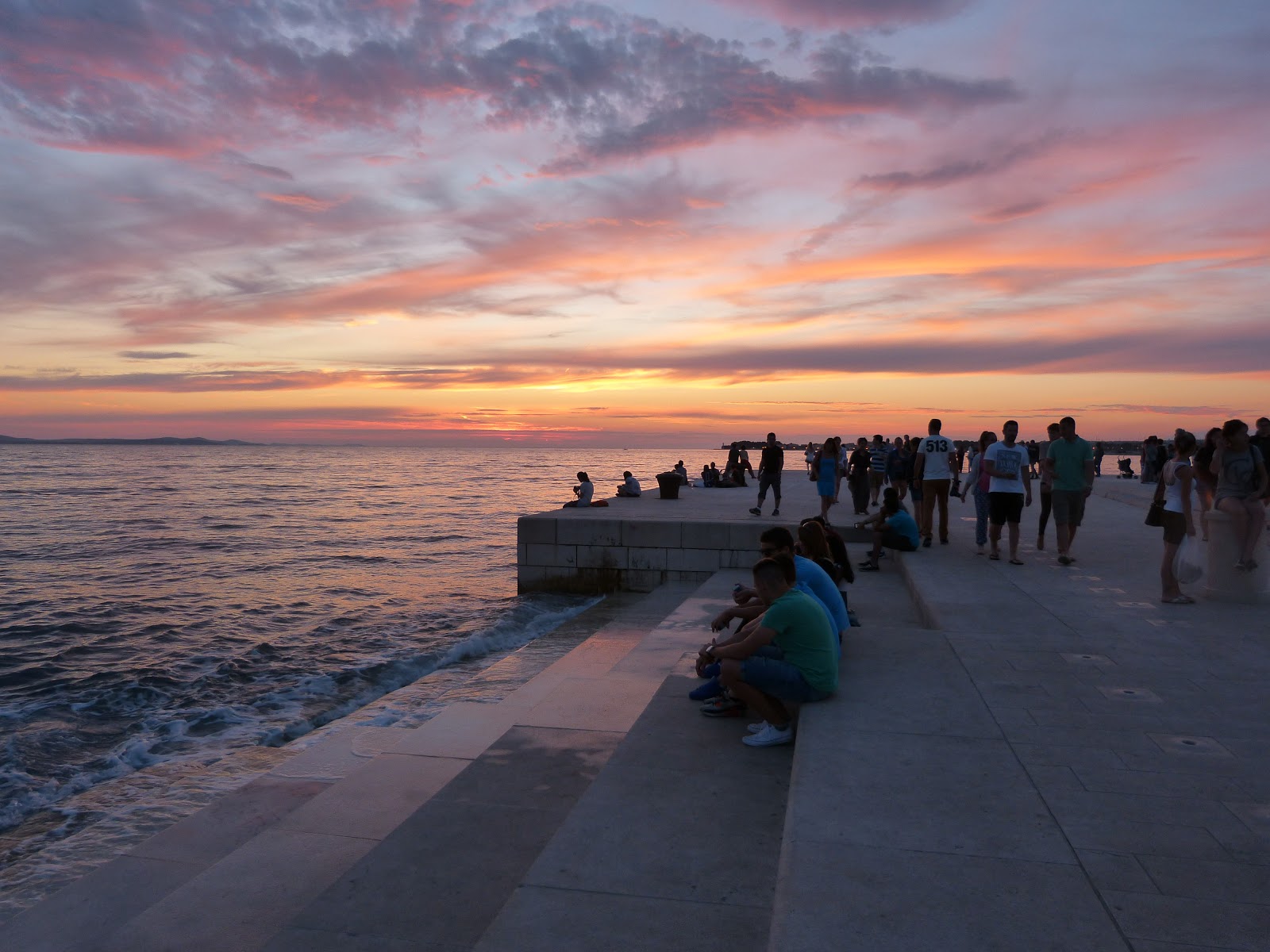


Sunset in Zadar


Zadar also has remarkable Roman ruins and you can literally sit around centuries-old stones and broken columns. The sqaure in front of the main church - St. Donatus - is in fact the ancient Roman forum. I liked how the ancient and new mingle in Zadar: the many churches with its white marbles, but also the modern shops and ice-cream shops.


Old Stones in Zadar


Plitvice Lakes


How can you say to really know Croatia without going anywhere inland? If you could go to only one place in the interior, I'd suggest that you visist one of the national parks.


Waterfalls in Plitvice


Plitvice Lakes is a convenient day trip from Zadar or a stop from Zadar to Zagreb if you plan to visit the capital city as well. The easiest thing to do is to join a group tour, which will basically drive you to the entrance of the park and back. This means you don't need to study bus timetables and you can focus on other things, like the stunning nature. 

Plitvice is a national park with a system of sixteen lakes connected by wooden foot-walks, with countless waterfalls. All the time you'll be walking among dense woodland. The animals in the park - ducks, butterflies, dragonflies and of course fish - make the visit more pleasant. 


The intense green of the nature and the pristine waters of the lakes and waterfalls are stunning. I was a bit unlucky because it started to rain while I was visiting the park, but this did not completely spoil my experience of the park. 


Plitvice Lakes has an entry fee which varies depending on the time of the year - when I was there in June it was 100 kunas (15€), but it could cost you up to 180 kunas in the summer months of July and August!

Sunday, 12 November 2017

Around the world in 15 meals

1) Instanbul, Turkey

What is there better than a plate of meze on a hot day in Istanbul? This is supposed to be just an appetizer, but it worked fine for me as a light lunch. It included various dips like hummus, eggplant salad and haydari, then dolma (stuffed vine leaves) and some cheese. Everything with vegetable sticks for the dips. By the way, that puffy bread is called lavas and I love it. 


Meze lunch in Istanbul

2) Mostar, Bosnia

One of my favourite meals in Bosnia and of the whole Balkan trip was the Hadzijski cevap (marinated beef with peppers and rice) that I had in the old town of Mostar. It was simple but delicious, and also really cheap! 

Bosnia


3) Amsterdam, Netherlands

What to do when you are visiting a country that is not really famous for its cuisine, you've already tried the obvious and looking around you can only see burgers and fries? In big cities in central or northern Europe, like Munich or London, I usually find that Asian food is top notch. So while in Amsterdam, I repeatedly stopped by Indonesian and Thai restaurants. My favourite was Bird Thai restaurant in Chinatown (close to the red light district). 


Red Thai curry in Amsterdam


4) Lisbon, Portugal

If I could recommnend only one Portuguese dish it would be  bacalhau com natas. The Portuguese have many ways to cook cod, but creamy bacalhau com natas is my favourite. I was lucky enough to participate in a dinner organized by my hostel in Lisbon and this is how I got to taste this delicious typical dish. I am already making plans to go back to Portugal and have it one more time. This is how much I liked it!


Bacalhau com natas
5) Schwangau, Germany

It might not be haute cuisine but I just had to try currywurst in Germany, if only for curiosity. The history of this spiced sausage is quite interesting, because it was invented in Berlin just after WWII borrowing curry powder and ketchup (or possibly Worcestershire sauce) from British soldiers. It became a popular snack with the workers who were rebuilding the devastated city, and it is still today a popular take-away food, not only in Berlin but all over Germany.


Currywurst in Germany
6) Marrakesh, Morocco

Vegetarian tagine in an informal restaurant in the medina of Marrakesh - my favourite kind of place where you don't feel weird if you're eating alone (in this case I wasn't). Tagine is the name of the earthenware pot where food is cooked, so you could have many different of tagine: chicken with vegetables, but also with sardines by the sea or with meat and dried fruit. I had this with a glass of orange juice, which seems to be ubiquitous in Marrakesh.

A vegetarian tajine in Marrakesh

7) Paris, France

This dish had a name so long that it did not fit in a single line on the menu. Then it turned out to be a steak with potatoes. Overall, my experiences with food in Paris went better when I blatantly tried not to order French food: for example at felafel joints or at a Korean restaurant. I think I owe Paris - and France - a second chance. Next time I'll document myself and try to order some French food with a better understanding of French cuisine.

A meal in Paris
8) Mdina, Malta

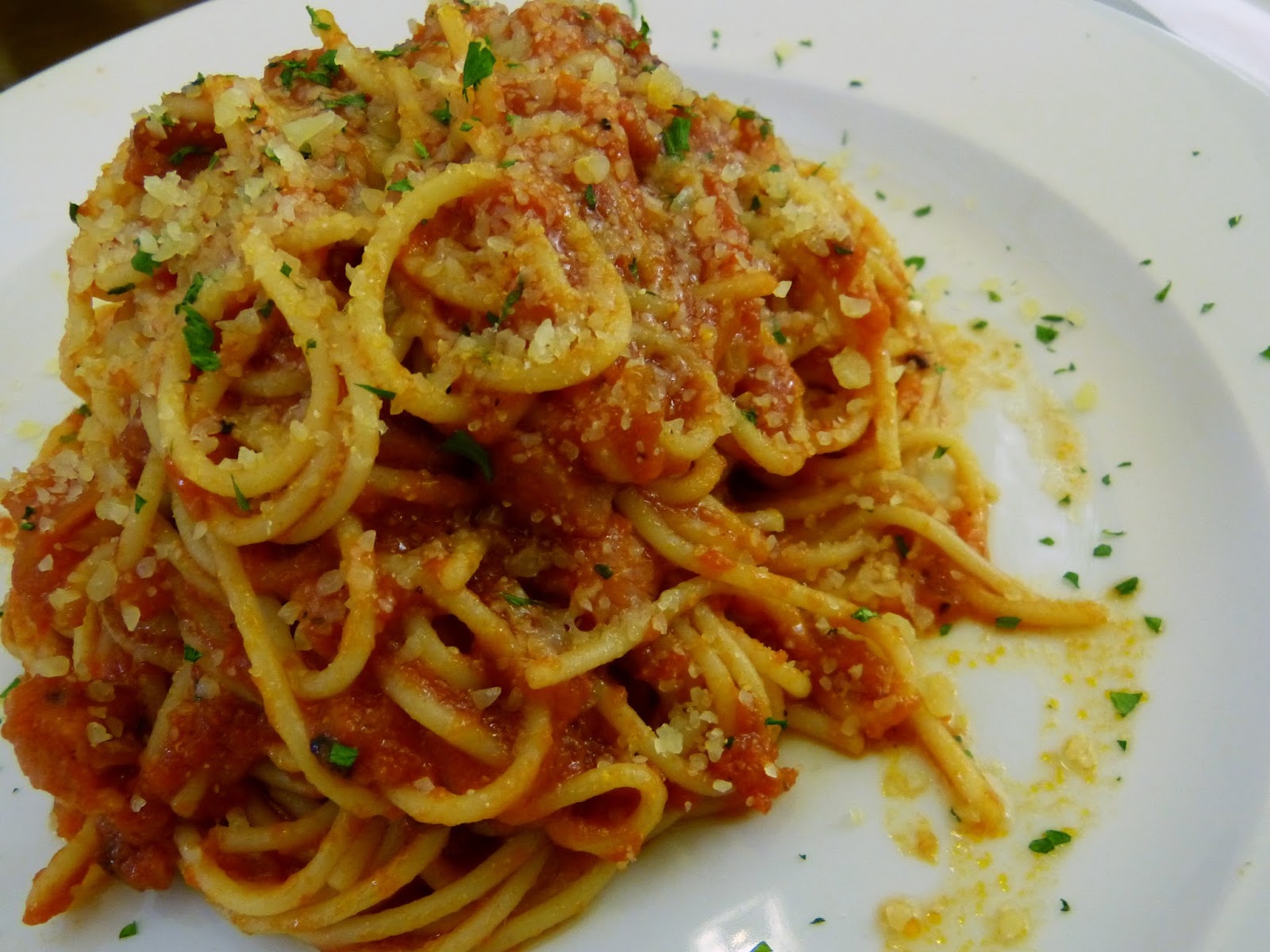
From a culinary point of view, Malta is a mix of influences. And how could it not be so? In spite of having been an English colony in the past, Malta is decidedly more Italian than British when you sit down for lunch or dinner. These spaghetti all'amatriciana - which means in a tomato sauce with pancetta (or even better guanciale) and chilli peppers - were really good. I discovered later that many Italian restaurants in Malta are owned by Italian people, hailing from all over the country and enjoying Malta's relaxed lifestyle and mild weather. 

Pasta all'amatriciana in Malta

9) Stratford-upon-Avon, United Kingdom

I'll always remember this bento box meal I had in Shakespeare's hometown, Stratford-upon-Avon. The Japanese chef was entertaining us, pretending to throw bottles at the clients and things like that. The food didn't look that Japanese, apart from the yakitori, but it was the first time that I had lunch in a box, and I loved the idea.


10) Valencia, Spain

You cannot get bored with all the food in Spain: pintxos from the Basque Country, tapas that may include fish or cured meats like chorizo or jamon iberico, and regional specialities such as the Andalusian gazpacho. After more than three years in Spain I am still busy discovering all its variety. Nothing beats, however, a good seafood paella in a fishing town. 


A paella in Valencia


11) Split, Croatia

For the most part I found Croatian food uninspiring.  They once served me cod telling me it was a more prestigious seabass, while risotto and pasta were only an imitation of what you would have in Italy (which is so close after all). This tuna salad, nevertheless, on the city beach in Split, was really good, and just what I needed after a morning of sunbathing and dipping my toes in the turquoise waters of the Adriatic.

Tuna salad in Split


12) Kotor, Montenegro

All over the Balkans you will find these spiced sausages: ćevapčići. Sometimes - especially in Serbia and Bosnia - they serve them with a piece of flat bread, with chopped onions and sour cream, but in Montenegro I had it with French fries. I really enjoyed the meal, plus I had a perfect view of the main square of Kotor.

Cevapcici in Kotor


13) Brno, Czech Repulic

Czech Republic might not be famous as a culinary destination, but I had a few good meals there. It was long ago, but I still remember having Smažený sýr, different kinds of fried cheese served with potatoes and salad. This was in Brno and not in Prague (I must be the only person in the world who has been in the Czech Republic but hasn't been to Prague).

Smažený sýr in Brno


14) Bangkok, Thailand

I arrived in Bangkok after travelling for many hours (and after two sleepless nights) and I went directly to take a much deserved nap. A couple of hours after I woke with a grumbling stomach and went for a Pad Thai in the neighboorhood. It was not long after that I became addicted. It is a simple dish after all: noodles with  bean sprouts, some prawns or seafood, and cashew nuts sprinkled on top. Oh, and don't forget a sprinkle of lime and some chilli peppers to have that caracteristic taste. 


15) Pisa, Italy

And last but not least Italy, my country. Even though I am Italian, each time I visit a new region I discover new things to taste. Italy is not only pasta and pizza, as I keep saying to those who think that Italian cuisine is boring! We have plenty of that, for sure, but also other dishes: risotto in the north, delicious grilled fish and seafood served with plenty of vegetables, soups with pulses in Tuscany and meat with mushrooms or polenta in the mountains. My favourite, though, is always pizza!

A pizza in Italy


Monday, 16 January 2017

Hvar: island of the senses

Hvar has everything I expected from a Croatian island: it's covered in pine forests, lavender fields and olive groves, it has beautiful secluded pebble beaches and a gorgeous historical centre. Moreover, the ferry from Split took me there in less than a couple of hours.
 
It has picturesque marble-paved streets full of flowers and trellis, and its main square looks out onto the sea, with countless smaller islands ready to be explored. Woods grow just behind the square, offering a perfect postcard picture. Hvar is one of the most visited islands in Dalmatia, so it's rather busy in the summer months, but it still shows its charm in the backstreets and quiet corners.

The main square in Hvar

Monday, 4 January 2016

On the footsteps of emperors - visiting Split

For a history enthusiast like me visiting Split in Croatia was a real delight and a dream that came true. The city grows around and within what used to be Diocletian's Palace, built around 300 AD as a private residence for the emperor's retirement. He chose this place because it was close to his home town of Salona. The palace was abandoned after the decline of the Roman Empire, but in the 7th century people took refuge here to hide from the Slavic invaders. They started to build houses and business shops inside the palace complex, which had been both a fortified citadel and an imperial palace. When I first arrived in Split I was asking myself where the palace was exactly, and then I realized that it is everywhere: inside private houses, on the courtyards of restaurants, or inside a museum!


Inside the palace

One façade of the palace looks onto the sea, while the others are fortified, with a gate for each side. Some of the decorations have disappeared, like the statues that stood inside the niches, but the Croatian men dressed as centurions will remind you that you are in a place of considerable historical significance. Tufts of grass or flowers grow among the stones, giving an air of fascinating decadence to the whole place.

One of the ancient gates

Walking along the walls, I was soon able to find, next to the Porta Aurea (Golden Gate), the statue of Grgur Ninski, the 10th-century Croatian archbishop who introduced the Croatian language for religious services. It is a pretty big statue and it has become one of the symbols of Split. It brings good luck to rub the statue's toe, which as a result is smooth and shiny.

The toe of Grgur Ninski's statue
 
Emperor Diocletian is famous for having harshly persecuted Christians but, quite ironically, after his death the mausoleum built to host his remains was turned into a church. It maintains the original 4th-century Roman structure, and it has a 2,500-old black sphinx at the entrance. Other parts of the church were obviously added  later, like the bell tower. A mish-mash of styles is rather astonishing, if not interesting. 

The mausoleum looks out onto the Peristyle, a monumental columned porch that formed the access to the emperor's apartments in Roman times and is now the main square of the town. In the evenings you can sit on the stairs, on red cushions provided by one of the bars, and listen to music performances while admiring the ruins or observing the architectural details. I was completely mesmerized by this square and I was trying to imagine how it looked like in Roman times.

The main square in Split
 
Split is such a fascinating place, full of surprises around the corners of its glistening paved streets. You pass under porticoes, next to columns, and observe windows with colourful shutters built into the structure of the palace.


Buildings from different periods intersect the Roman ruins, forming a chaos that is nonetheless rather charming. Restaurants and bars put their tables on the paved streets, next to the palace walls, offering their food: seafood and pasta are everywhere, but you can also find soups and Bosnian cevapcici if you search well. While getting lost in the narrow streets of the old town, you can peer through an iron gate and discover a secret garden with ancient marble columns and thousand-year-old stones that formed part of the temples and buildings inside the palace.
 

Peering through a gate and discovering a secret garden in Split

My favourite sight in Split was Jupiter's Temple, once part of the complex of the palace and now a baptistery. There's a headless Egyptian black sphinx guarding the entrance, but the real star is the door. I photographed it so many times at different hours of the day, because I love the carvings and the marble with which it is built. It made me feel like Indian Jones, especially because it is located at the end of a small street that departs from the Peristyle, elevated from the main street level. Interestingly, the statue inside the small temple is not of Jupiter but of Saint John the Baptist.

Door to the temple of Jupiter

In spite of being a city built around ancient ruins, Split is rather modern, with fancy shops and sophisticated restaurants that could compete with any town in Italy. It was quite a shock to come here directly from Sarajevo, which is in many ways a simpler kind of place, with less international brands on display and devoid of that annoying obsession for everything hipster.
 
A restaurant in Split
 

I will give you an example of the kind of shock that travelling from Bosnia to Croatia will give you. On my way back to the coast of Croatia from Bosnia, which is almost a landlocked country, we passed through some mountains, and then entered a valley. There, the first thing I could see after villages and villages characterized by a small mosque with a tall slender minaret, was a church with a pointy bell tower. This reminded me of the religious divisions in the area, and how different ethnicities live side by side in this part of the world.
 
A religious image inside a window in Split
 

Outside of the city walls, the city is equally beautiful. Walking along the Riva - the seafront with a Venetian name - is really pleasant. From here you have a view of the outer walls of Diocletian's palace, but you can also enjoy the nice breeze coming from the sea. I remember that there were some stalls selling fritule, which is a sweet of Venetian origin, except that we only eat them around Carnival time, in the winter, and here there are for sell even in the summer. I also took a long walk on the hill that surrounds the town, and ate a really good dinner at Konoba Fife, right at the end of the Riva. You can have fresh mussels or seafood risotto here for a very reasonable price.
 
The Riva
 

For my second day in Split I know I wanted to relax, so I headed for the beach. There is one just outside of the town centre, but as most beaches in Croatia it is rocky, not sandy. It's called Bačvice beach: it is crowded, but not unpleasant. The water is crystal clear and there are some nice bars along the shore for refreshments and maybe a good tuna salad.
 
Bacvice beach in Split
There isn't much to do in Split, aside from walking around. Split is like an open-air museum, where occasionally you'll enter a two-thousand-year old structure. I found it interesting fascinating that the purpose of certain buildings is not certain: it sheds an aura of mystery to the old town. I know that I could have kept walking around for days, learning new things and enjoying the atmosphere of a town that's truly unique.
The town centre of Split


Monday, 13 July 2015

Welcome to Dubrovnik: the Pearl of the Adriatic

Dubrovnik was perhaps my favourite destination in Croatia. I know that many people hate how packed with tour groups it can get, and how touristy and expensive it is, but there is obviously a reason why so many people want to visit it. The first time I walked through the Pile Gate and saw the famous marble-paved Stradun in all its shine and glory, I was in awe. 

Stradun
Everywhere you look there is beauty, and to think that the city was bombed by the Serbian army in the early 1990s makes me shudder. 
 
Dubrovnik Old Town
 
I was also lucky that in early June the old town wasn't too packed with people. At night after dinner and early in the morning the it was particularly quiet, because the big tour groups were gone. Being a popular stop for cruises in the Mediterranean, Dubrovnik can get horrendously full of big groups of older tourists with khaki shorts and sun hats being led through the town by a lady with an umbrella.


Another view of Stradun
 
Another thing that makes it hard to love Dubnovnik are the prices, which are just ridiculous.: I've seen small bottles of water for sale at 15 kunas (2€), and soft drinks for 30 kunas (4€). The old town is really small, so it's difficult to get away from the touristy parts. For a nice evening meal, you could head to Lokanda Peskarija, one of the restaurants of the harbour, recommended both by locals and by guidebooks. I paid 122 kunas (16€) for a very big plate of grilled squid served in a big black pot and a gigantic season salad. Other meals I had within the old town weren't as exciting: in a restaurant I was even served cod when I was promised a seabass fillet.
 
It became natural for me to try to save a few kunas here and there. As most hostels in Croatia don't offer breakfast,  I soon discovered that bakeries (pekarna in Croatian) sell excellent croissants and the also make coffee on the go. In the morning I would buy a croissant and a cup of coffee at Mlinar and sit on the Onofrio Fountain, looking at one of my favourite sights in town, the church of St. Saviour, which dates back to the 16th century.
 
Church of Saint Saviour
 
One of the best views of Dubrovnik is nevertheless that of the harbour, as seen from the eastern gate and bridge close to the Dominican Monastery. It is absolutely breathtaking, and not even that inflationed with tourists.
 
 
View of the harbour
Of course I couldn't miss the opportunity to have a walk along the famous city walls. At 100 kunas (13€) it isn't cheap, but it's really worth it. I went there in the late afternoon, so the sun wasn't too strong, and it was a wise decision. Dubrovnik is called "the Pearl of the Adriatic" and I can see why: the sea is of an incredible light blue colour, and the roofs of the  houses offer a great contrast to it and to the paved roads.

A view
Walking along the city walls
Panorama of the town from the city walls
 
 
Many of the big churches in Dubrovnik wouldn't look bad in Venice, and while many people love them, especially the Church of St. Blaise, I fell in love with  the little ones, all built in stone, with triple bells and elaborated rose windows. Sometimes a tuft of grass would spring out of the stones, and I even saw a tree growing out of a vase on a façade. The tiny Church of Saint Nicholas (Crkva Sveti Nikole) is one of my favourites. In the evening the restaurant nearby puts the tables in front of its main door for lack of space.
 

A cute little church


One thing that I liked about Dubrovnik is that there is always something going on: for weddings and baptisms, for example, you will see the guests in elegant dresses parading through the Stradun, led by a man weaving a Croatian flag and another playing the accordion. At other times, you will run into an orchestra, complete with bachelorettes and trumpets, or into a man performing traditional music while sitting by the Onofrio fountain.
 
 
Man performing in traditional costumes
 

Another pleasure of being in Dubrovnik is the wander its small streets full of staircases, looking for beautiful corners with colourful laundry out to dry and a view of the orange roofs.


A view of Dubrovnik
There might be surprises here and there, such as a stall selling lace next to a Romanic church, or a lounge bar built on the rocky cliffs that look directly down to the sea.


Selling lace
Overall, there are many things to love in Dubrovnik, and others that you'll have to endure to enjoy this jewel. I think it's important to take it for what it is: an extremely popular tourist destination, with Game of Thrones tours that sell for exorbitant prices, but also with lesser visited museums (the cloister of the Franciscan monastery is particularly beautiful) and charming small streets.
 
Franciscan monastery
 
With a little patience it is possible to find quiet streets that are not overrun with tourists. Dubrovnik may not be everyone's cup of tea, with its expensive fish restaurants, its baroque churches and endless holiday apartments to rent, but I think that it is really a beautiful place to visit, with lots of history and surprises behind every corner.
 

A quiet street in Dubrovnik

 
Have you been to Dubrovnik? What did you think?


01 09 10