Saturday, 1 February 2014

The Ghetto of Venice

"So now we will pass through the ghetto", I said casually while leading my new American friends through the calli of Venice.
 
"Oh my God" said one of the two young couchsurfers with surprise and apprehension, " is it dangerous?".
 
Little did they know that this was a completely different kind of ghetto, not a place of segregation, poverty and crime within an American city, but an area of the town where historically the Jewish population used to live, with restrictions certainly, but also in relative wealth. The word ghetto - which was later used for Nazi Jewish quarters in Eastern Europe or for racially segregated neighbourhoods in the United States - was in fact born in Venice to indicate the area where Jewish people were confined in the past. Its origins indicate a possible foundry that existed on the island that was chosen to accommodate the growing Jewish population of Venice in the 16th century.

Ghetto, Venice
Campo del Gheto Nuovo


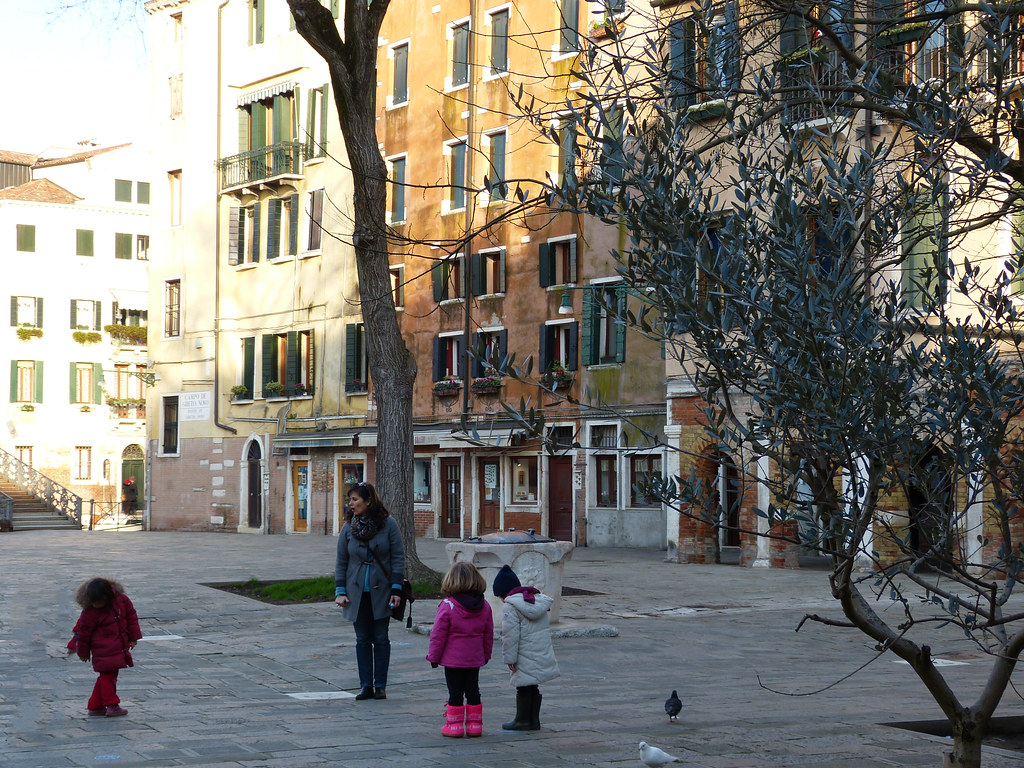
Today the Jewish ghetto of Venice is, at least according to me, one of the most charming places in all of Venice. It is formed by a campo, the only one in the town without a church, and by several narrow streets. If you are not looking for it, you might as well miss it. Campo del Gheto Nuovo is a peaceful place, with children playing, the occasional Orthodox Jew walking by, and buildings taller than the ones you can see in the rest of the town. This is because the Jewish population of Venice was restricted to this area, so people built taller houses to accommodate everyone.
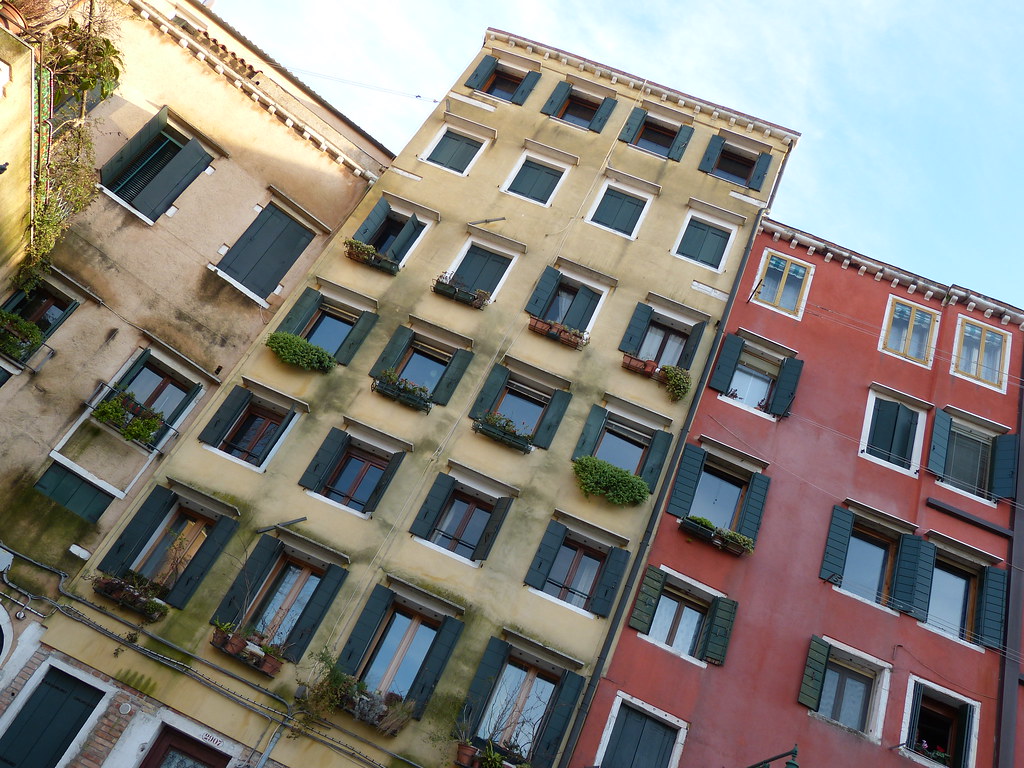
 
Tall Houses - Ghetto (Venice)
Tall Houses in the Ghetto

Ghetto, Venice
Children playing at the ghetto


It is almost impossible to distinguish the synagogues from the outside, as they were expressively built not to be ostentatious from the outside. You can identify one of them by a series of five windows with green shutters representing the first five books in the Bible. You can see another if you look at one corner of the square: that strange wooden structure with a small dome is the place in the synagogue where the ancient scriptures are read in one of the old historical synagogues. I think one of the reasons why Venice, and this area in particular, is so charming has to do with the state of decay of some of the houses and palaces, as if a veil of nostalgia made Venice more special.
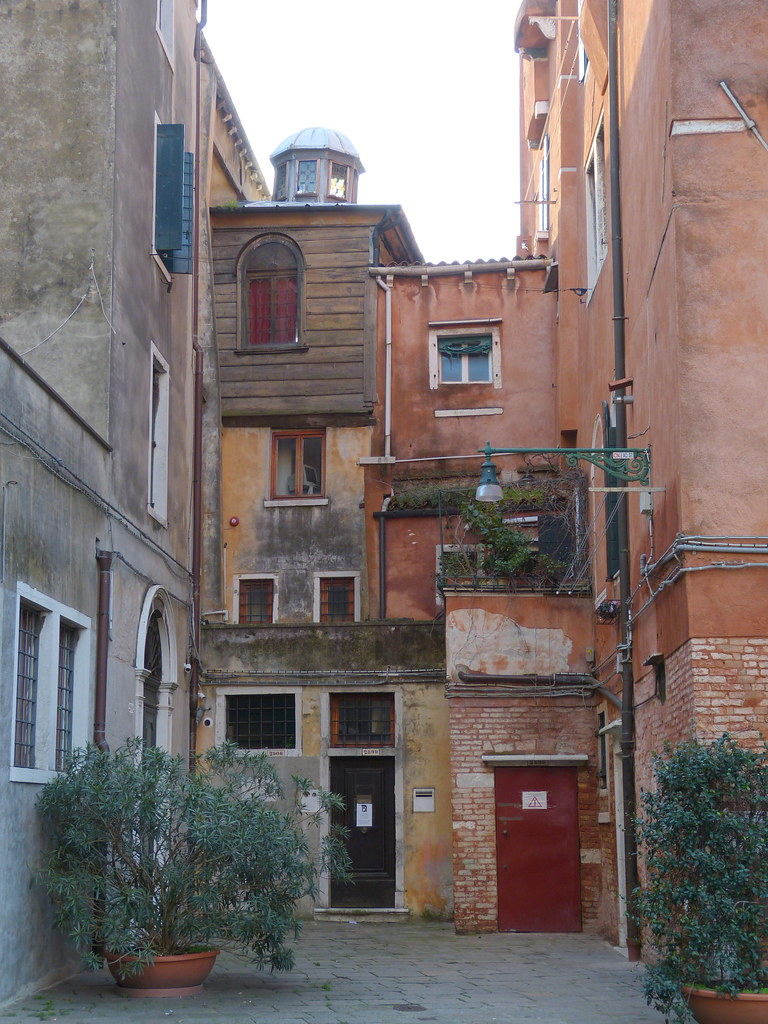

Angolo ghetto, Venezia
A corner with the synagogue visible
The Orthodox Jews you will see in the square are not native of Venice, but they relocated from other parts of the world. Understandably, Venetian Jews nowadays live all over the town, and not only here. In a corner of the square there is a monument that remembers the Holocaust, with the names of all the people who were deported. It is indeed a touching monument, but don't make the mistake of associating the neighbourhood with this only.


Ghetto (Venice)
The monument commemorating the people who were deported
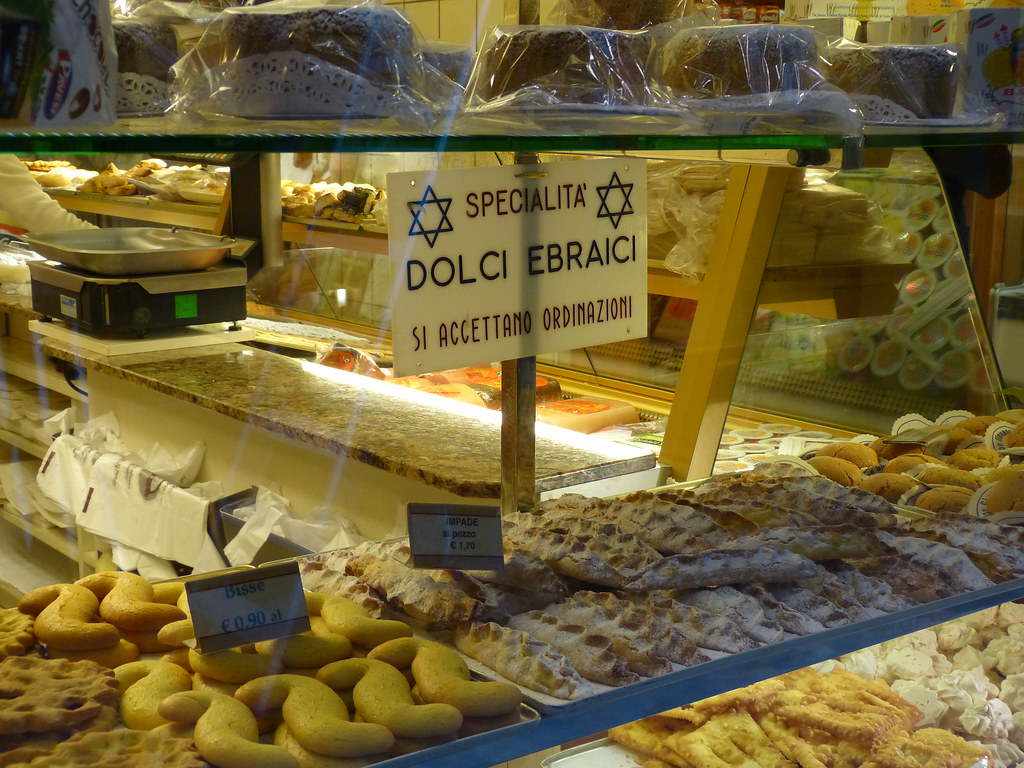
As a matter of fact, the area is peppered with art galleries displaying the work of Jewish artists, a couple of shops selling Jewish items, especially candleholders, and a kosher restaurant. The latter is not bad, if you fancy a change from the average Italian menu. What they offer is a mixture of Italian and Middle Eastern dishes, and they have a very nice and filling appetizer dish for €9,80. I find the area more lively than most Jewish streets or neighbourhoods in other Italian towns, like Ferrara. There are also a couple of bakeries, and a museum in a corner of the main campo.

Ghetto (Venice)
Kosher bakery

To visit the aforementioned museum, you can pay the normal entrance fee (4€) or ask for a joined ticket that will also give you the possibility to visit three synagogues with a guided tour that starts every hour, in English and Italian (10€). Don't visit the museum without the guided tour of the synagogues, because that's the highlight of a visit to the ghetto. The tour is very informative, and the guide will answer every possible curiosity you may have about the Jewish community in Venice. And of course, you'll have the opportunity to see the old synagogues and learn about the different congregations and the life of Venetian Jews throughout the centuries.
 

Ghetto (Venice)
A corner of the main square
I suggest that you don't miss passing through the ghetto while you're in Venice. The area is not far from the railway station. Just take the street that starts on the left of the train station (don't cross Ponte degli Scalzi), and go straight until you reach a bridge (Ponte delle Guglie). After passing the bridge, turn immediately to your left following the canal. Here you should see a yellow sign helping you. It's written in both Italian and Hebrew. Turn right under the stone doorway when you see a restaurant with tables along the canal.

The ghetto is not an overtly touristic area of Venice, and there are quiet canals all around it, so it's perfect for a pleasant walk on a sunny (or not so sunny day).
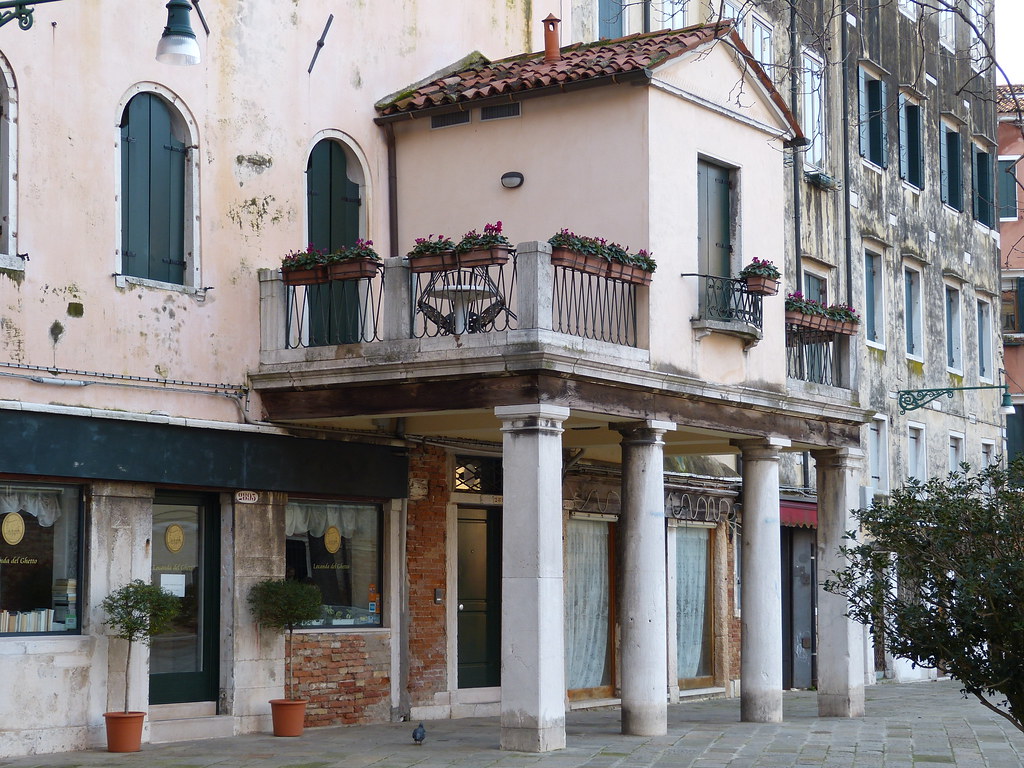
 
Ghetto (Venice)
The quiet Fondamenta degli Ormesini, near the ghetto

Monday, 27 January 2014

Exploring the Euganean Hills

Sometimes in Venice I crave real nature and want to see some idyllic country life, so a few days ago I decided to spend half a day in the Euganean Hills, lying a few kilometres south of Padua. The area is also a regional park, and it's dotted with agriturismi (restaurants that offer food that's locally produced) and bed & breakfasts. The Euganean Hills are also renowned for products like wine, honey, olive oil, and brodo di giuggiole (a liquor made with jujube fruits). To explore this region I took a train from Venice to Monselice (47 minutes) for €4,75 one way.

Euganean Hills
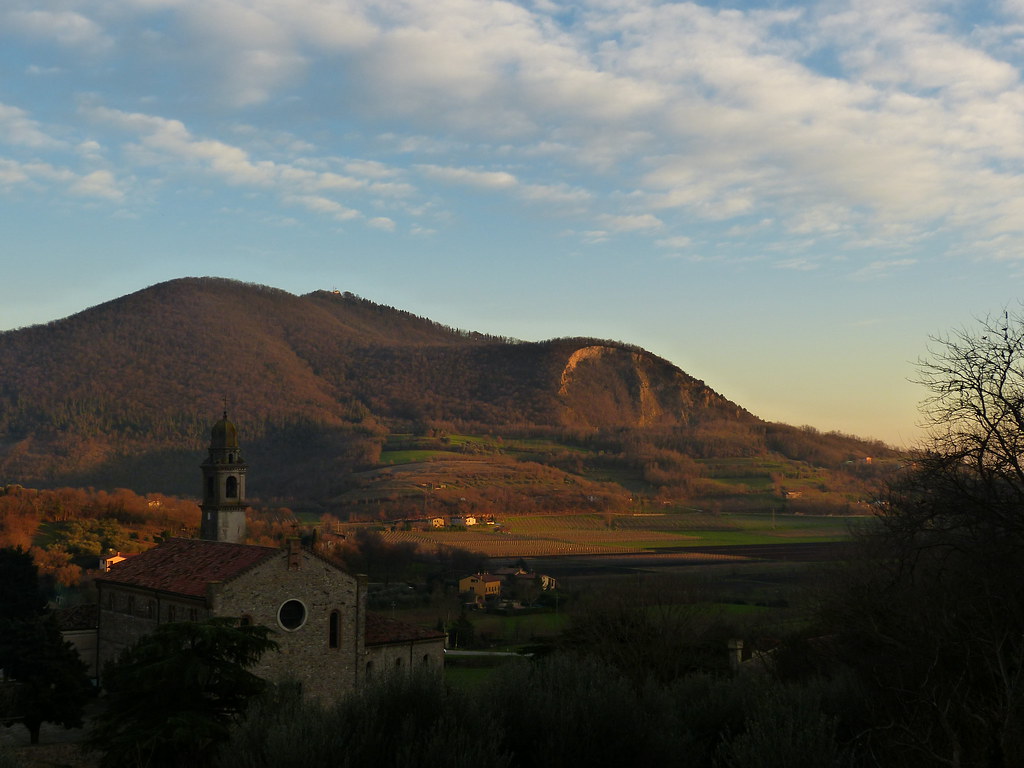
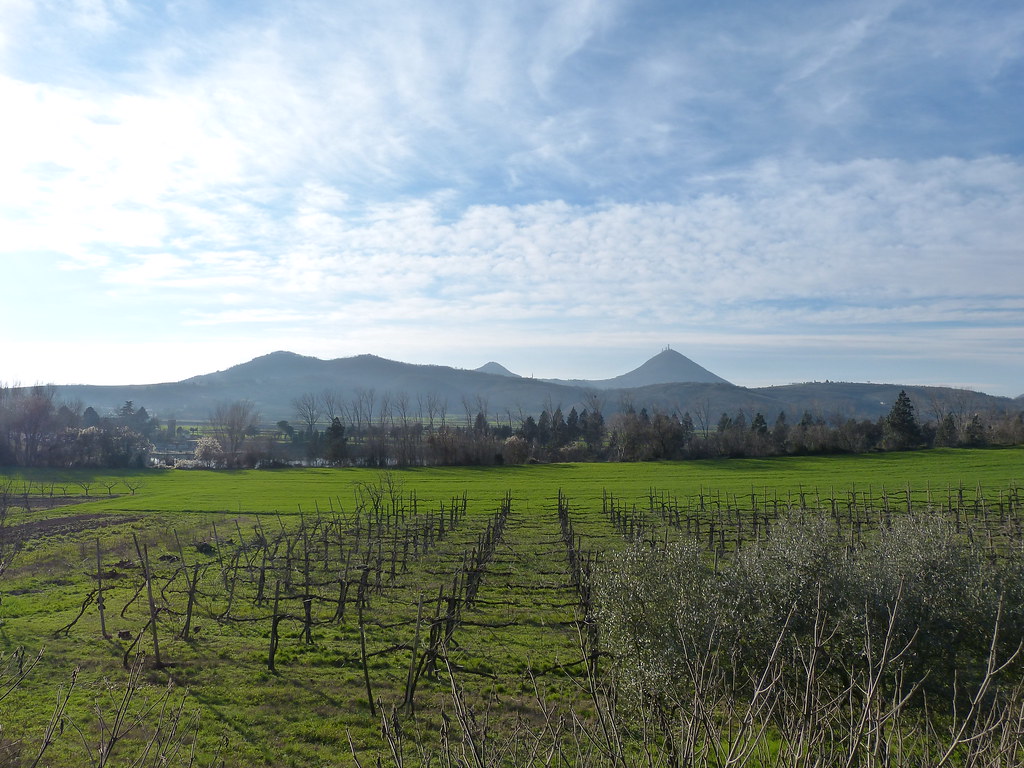
Euganean Hills near Arquà Petrarca


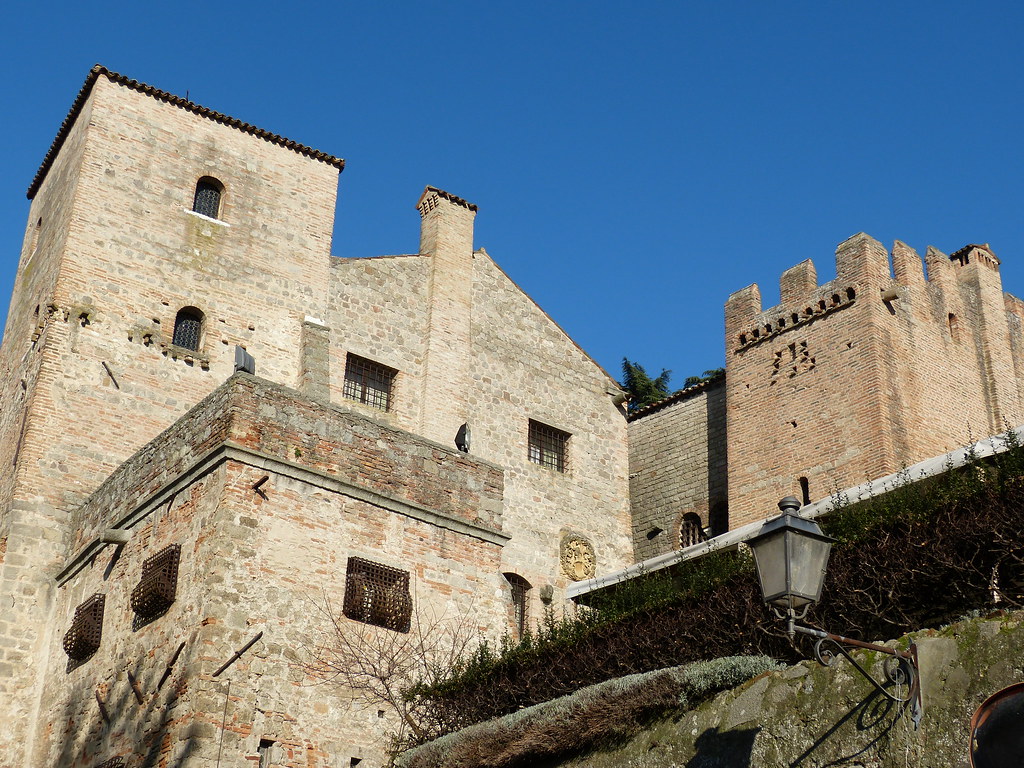
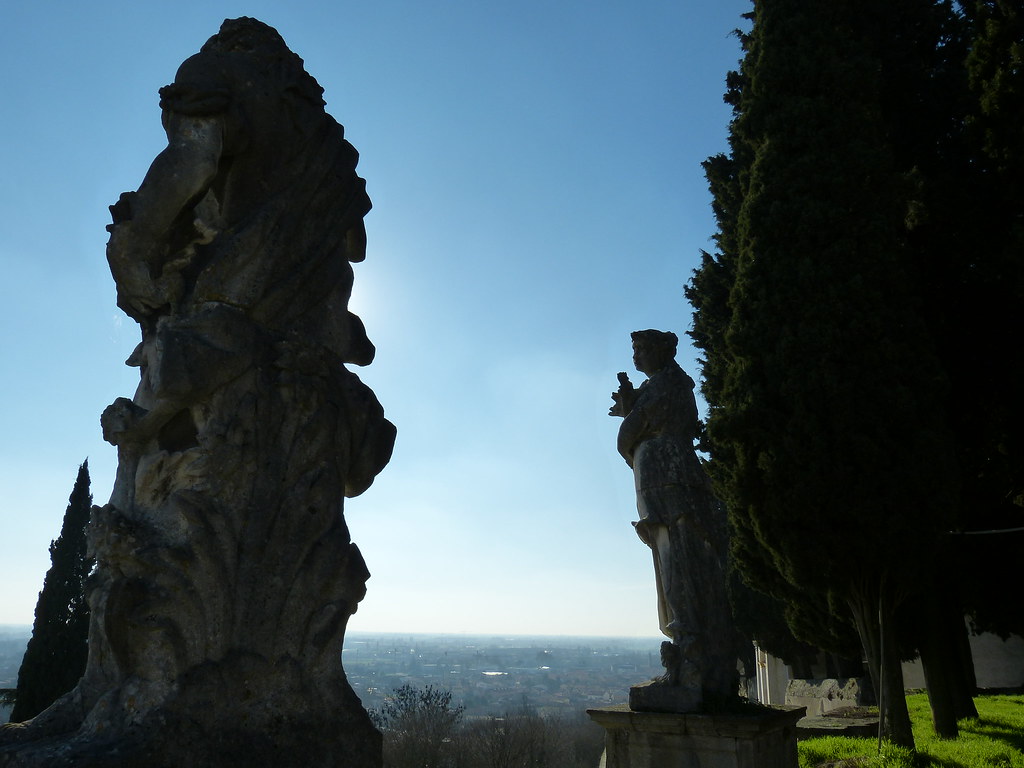
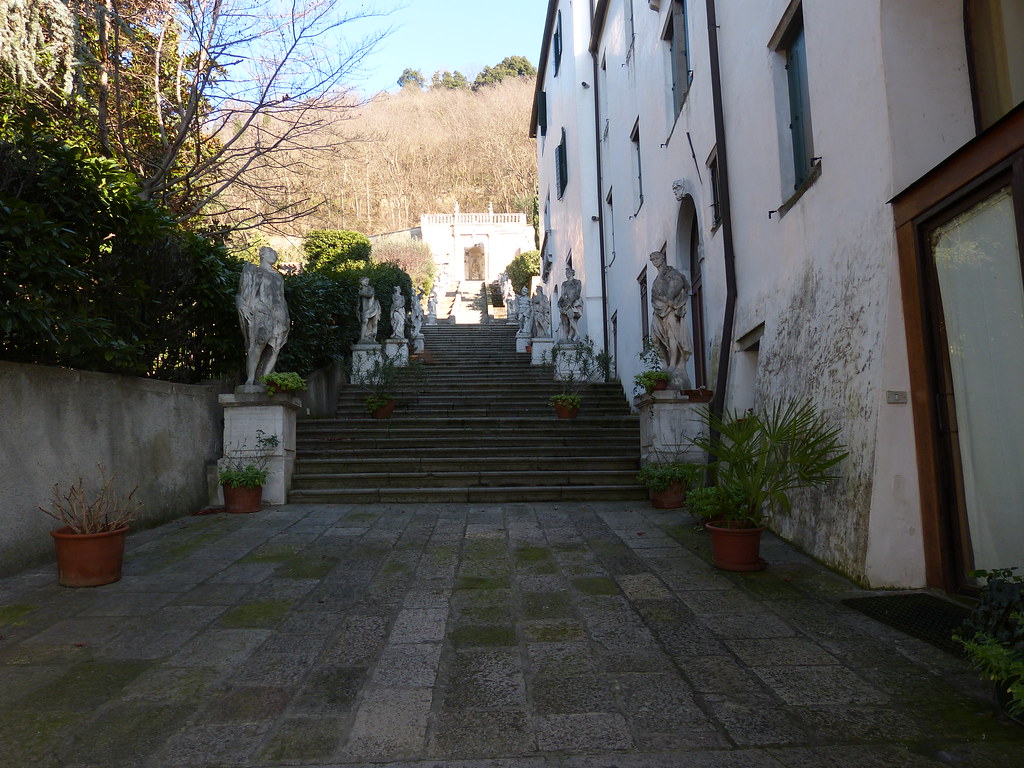
In Monselice there are some medieval fortifications, a tower and a castle perched on a hill. Unfortunately, when I visited it was winter, and the castle was closed, so I can't tell you if it's worth going in. In Monselice you have a magnificent view over the surrounding plain and the hills. There are also examples of architecture from other periods: villa Nani-Mocenigo was for example built at the end of the 15th century, and Villa Duodo at the end of the 16th century. They were both owned by aristocratic Venetian families, and still today they are very scenic, even seen from the outside. There is even a monumental staircase with statues to give you an idea of the extravagance of these families. For the Duodo family, Vincenzo Scamozzi also built the Seven Churches Sanctuary, which later became a pilgrimage site.
Monselice (PD)
Castle of Monselice

Monselice (PD)
Statues at Villa Duodo


Monselice
Staircase of Villa Nani
After having a look at Monselice, I took a long walk among the hills to reach another jewel of the area, the tiny village of Arquà Petrarca. It takes about one hour to reach it on foot, but the landscape is breathtaking. On the way I met many people on their bikes, hiking, or even horse-riding. Apparently it is not uncommon to do this passeggiata (walk) when the weather is nice. The road meanders through vineyards, farmsteads, and olive trees. Needless to say, it is beyond pleasant.

Colli Euganei
Euganean Hills between Monselice and Arquà Petrarca

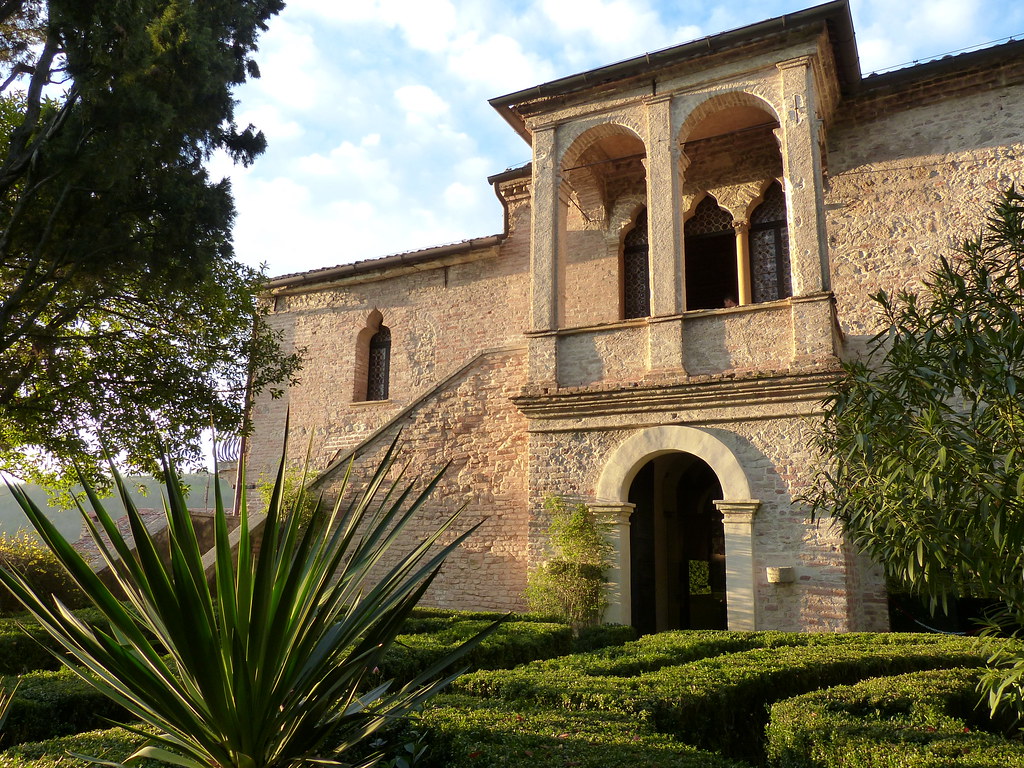
Arquà Petrarca is an enchanting village, actually included in "I borghi più belli d'Italia", a list of the most beautiful Italian hamlets (I can't find a better word to translate borgo) . The place is famous because it hosts the house where the 14th-century poet Francesco Petrarca resided in the last years of his life, surrounded by olive trees and vineyards. Many famous people have visited the house, and the area, in the past centuries, including Lord Byron and Percy Bysshe Shelley. If you are visiting Colli Euganei, it is really worth paying a visit. The house itself is lovely, and it has some frescoes inside, as well as a small exhibition about the poet's life.


Casa del petrarca, Arquà Petrarca
The house of Petrarch

Arquà Petrarca (PD)
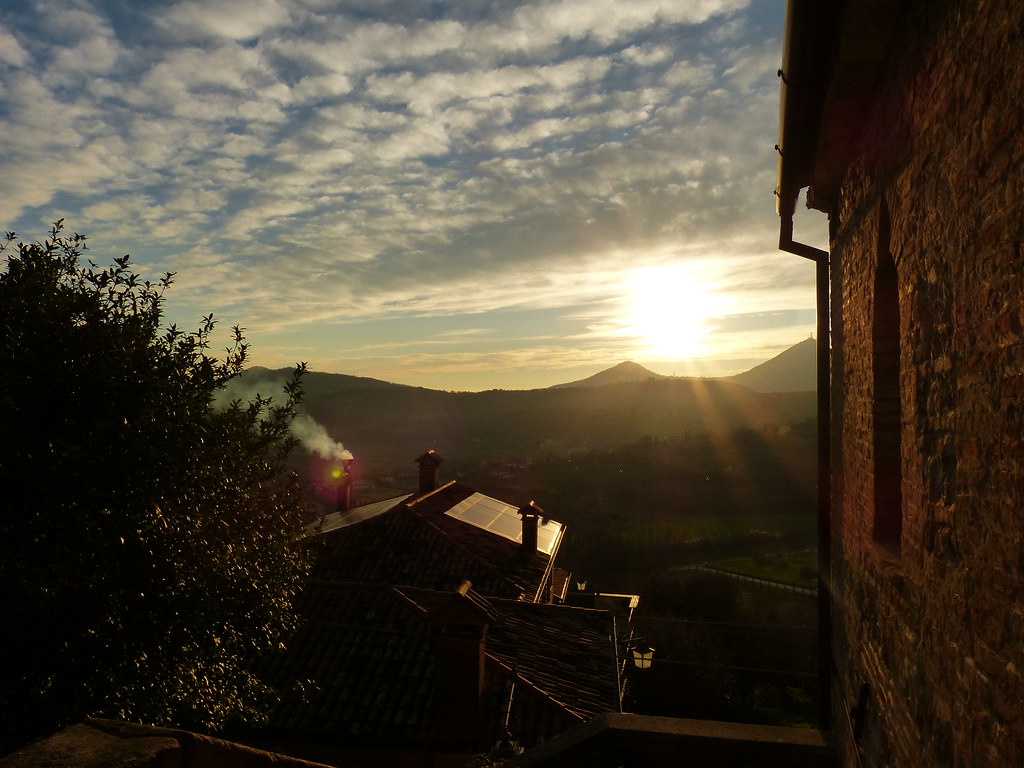
View from the balcony just before sunset
The village is pleasant even if you don't know much about Italian literature. Who said that you need to go to Tuscany to find peaceful and picturesque medieval villages where life seems  to have stopped?

Arquà Petrarca (PD)
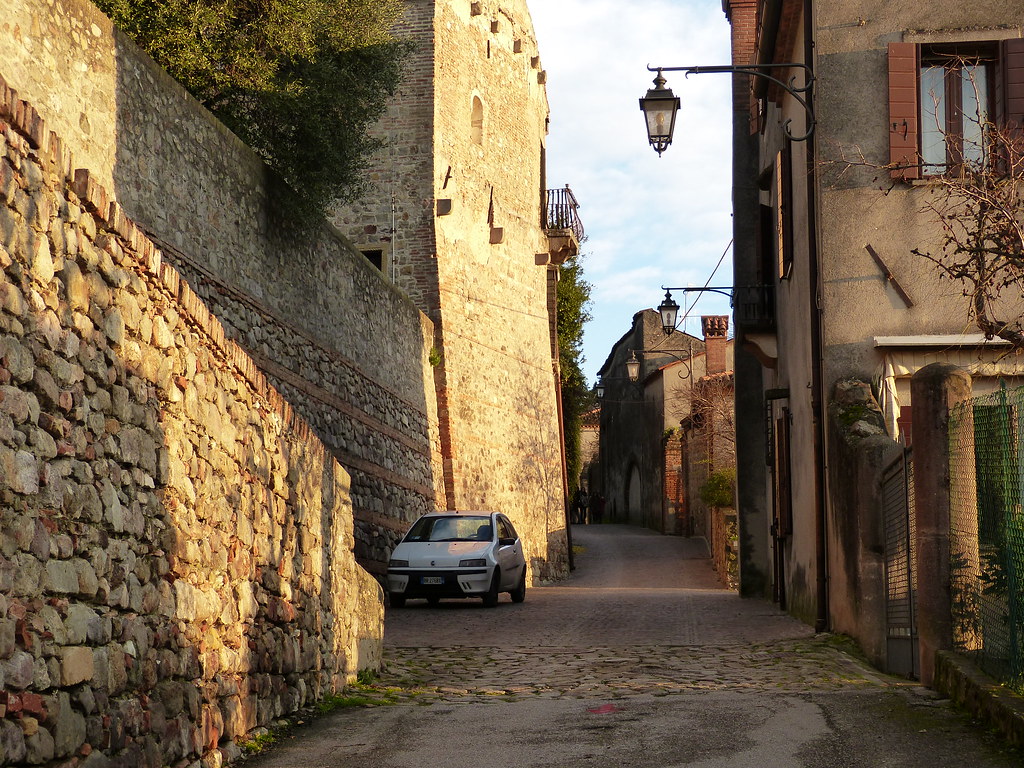
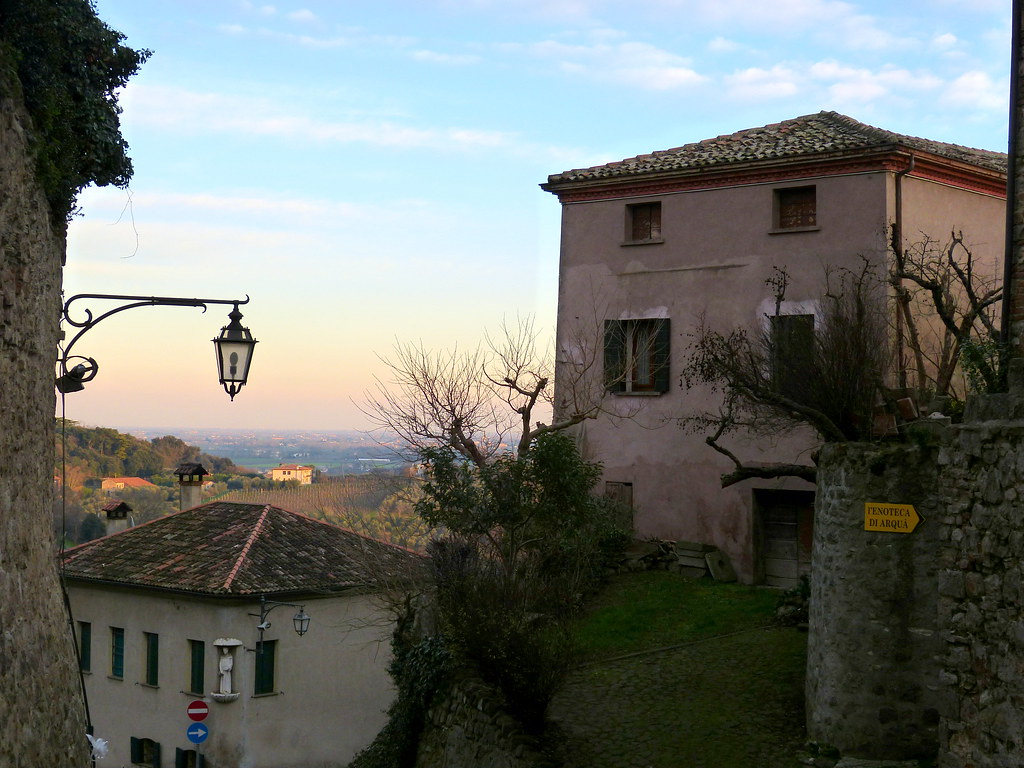
Historical Arquà Petrarca


Arqua Petrarca
Arquà Petrarca

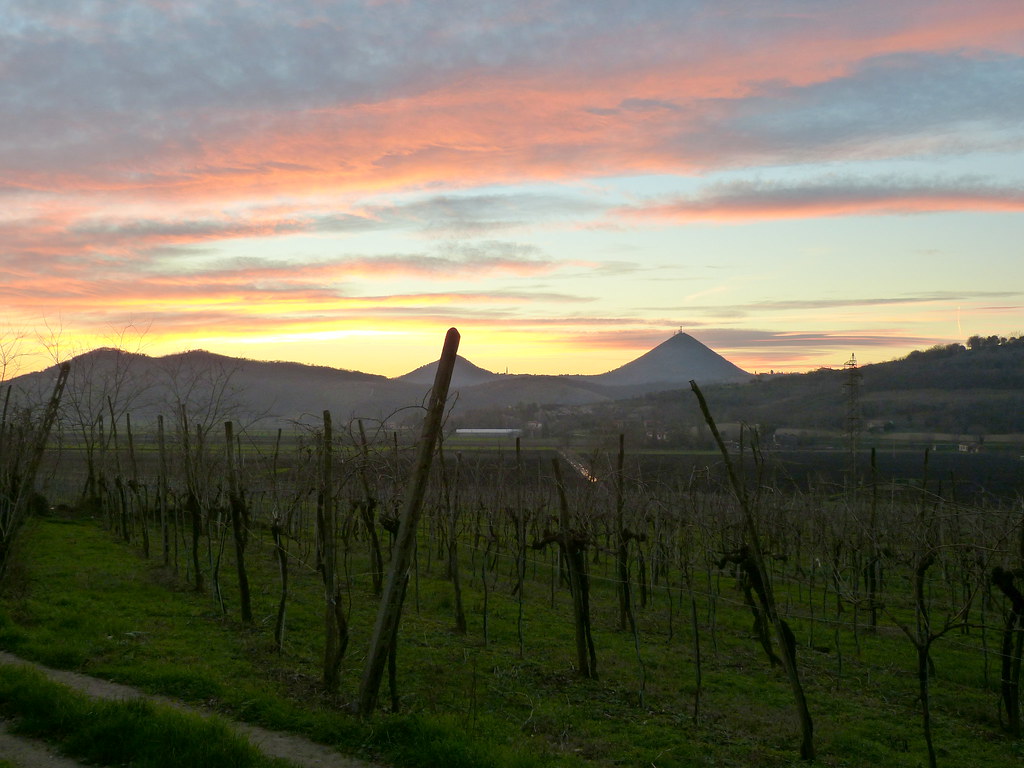
On the way back towards Monselice I saw a spectacular sunset: it encompassed all the colours from orange to pink and even violet. It was a short trip, but really rewarding. It was almost like travelling back in time, when the rhythms of life were slower...


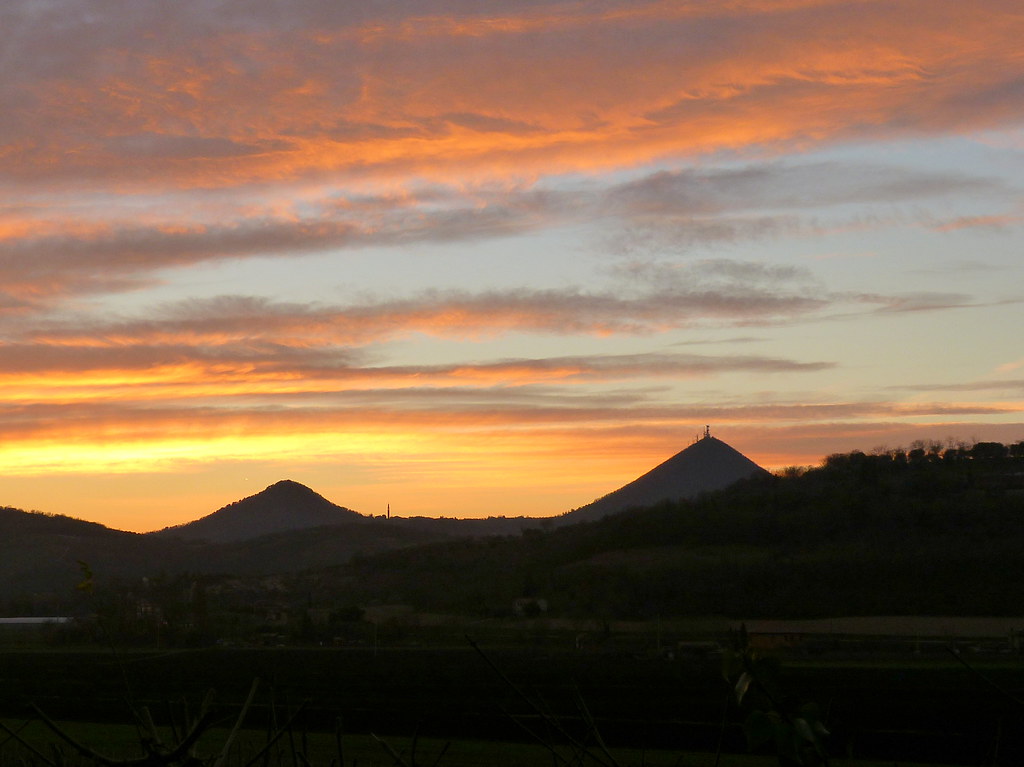
Sunset among the vineyards, Euganean Hills
Sunset among the vineyards

Sunset Euganean Hills
Sunset again

Wednesday, 22 January 2014

The Other Czech Republic

Believe it or not, when I was in the Czech Republic a few years ago, I didn't go to Prague because I was visiting a couple of friends who live in the eastern part of the country, in a region called Moravia. There was so much to do there that I didn't feel like I missed out, saving Prague for my next trip to the Czech Republic.
 
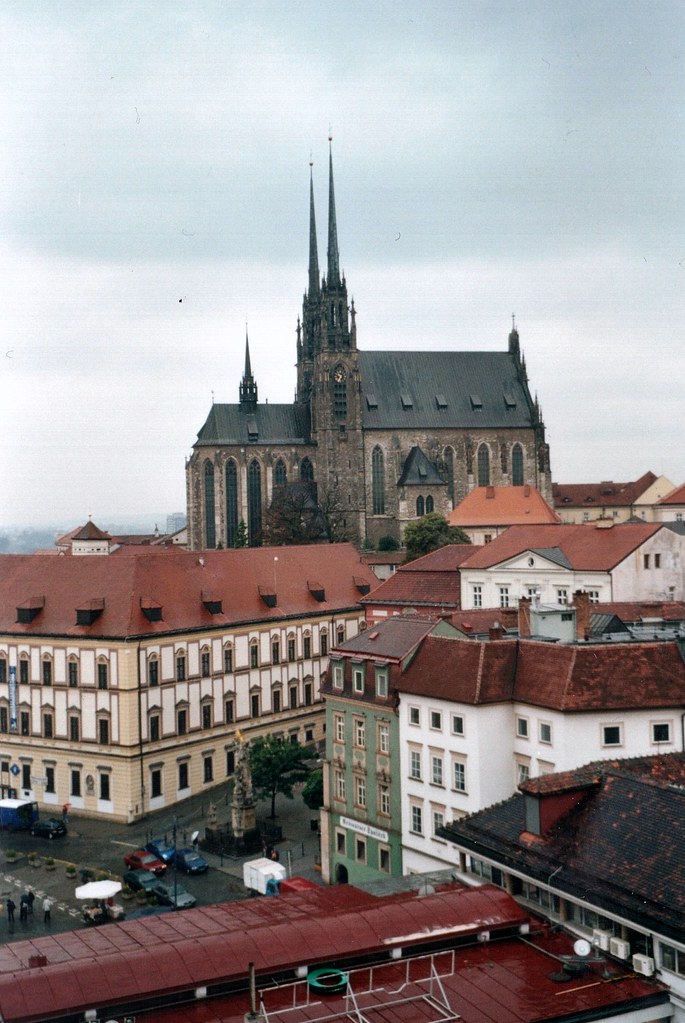
I started my short trip from the city of Brno, the capital of Moravia. Brno is a typical central European city: churches have bell towers with onion-shaped roofs and cathedrals with many spires. The castle that dominates the city is worth visiting,  but it's not mind-blowing, in my humble opinion. There weren't many tourists in Brno, and I often found myself using the few Czech words I had learned in those few days in restaurants or at the entrance of small museums. I entered the Capuchin Monastery, for example, trying to make use of the language section in my guidebook. Incidentally, that was one of the creepiest places I have been to in my whole life: the bodies of some mummified monks are on display here, and  they are laid down in a natural position, unlike Egyptian mummies.

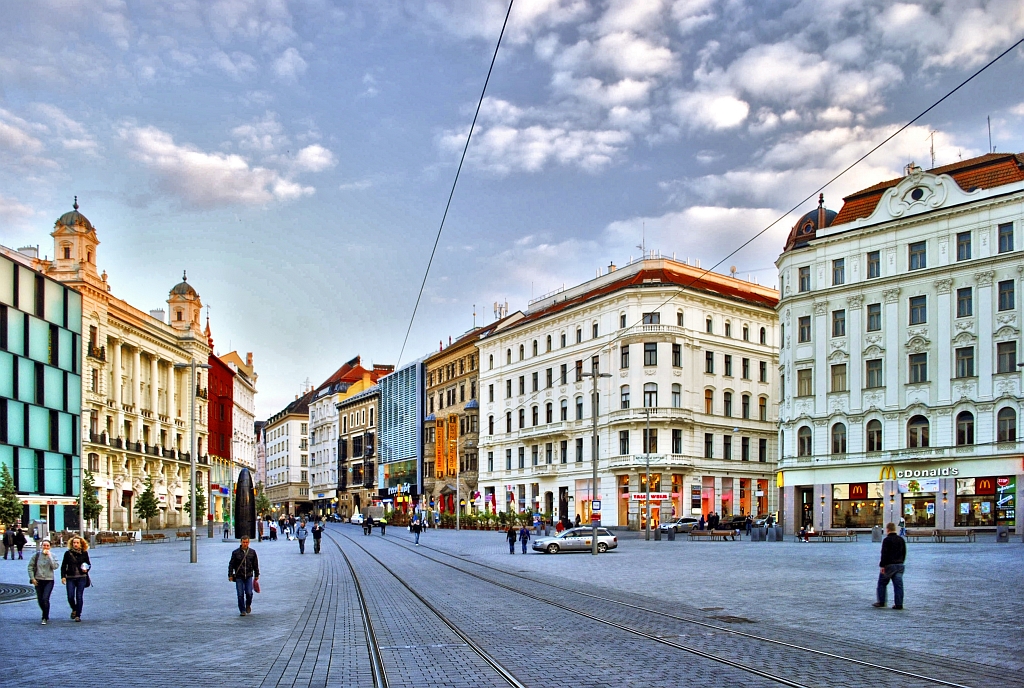
Brno
Brno (picture by Szymon Pifczyk, retrieved on flickr)

Brno
Brno, Cathedral of Saints Peter and Paul

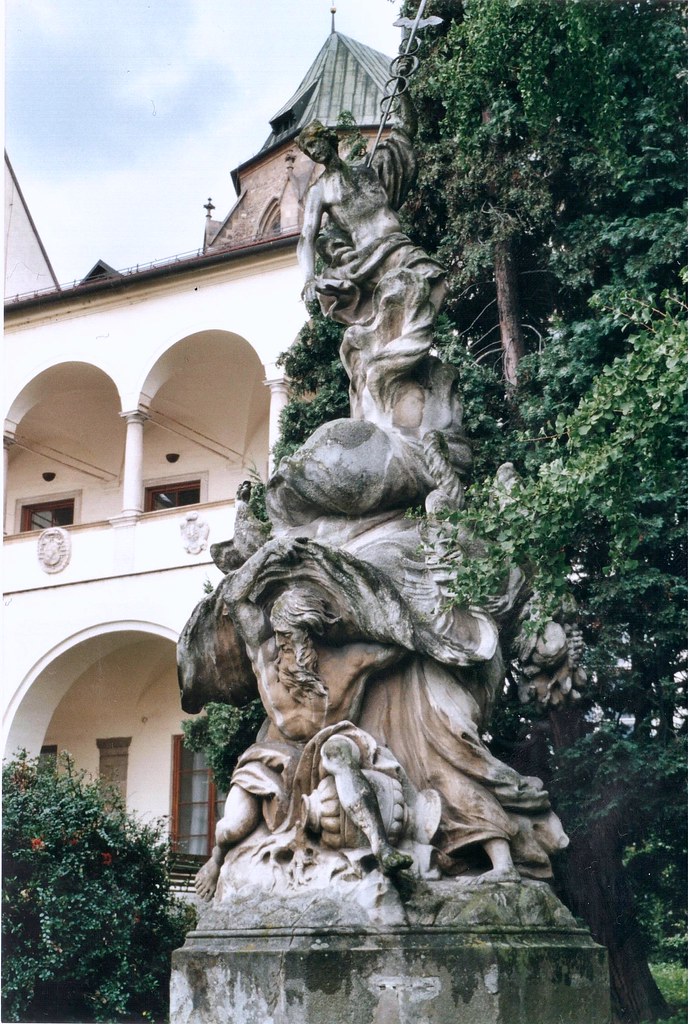
Bishop's courtyard, Brno
Bishop's Courtyard, Brno

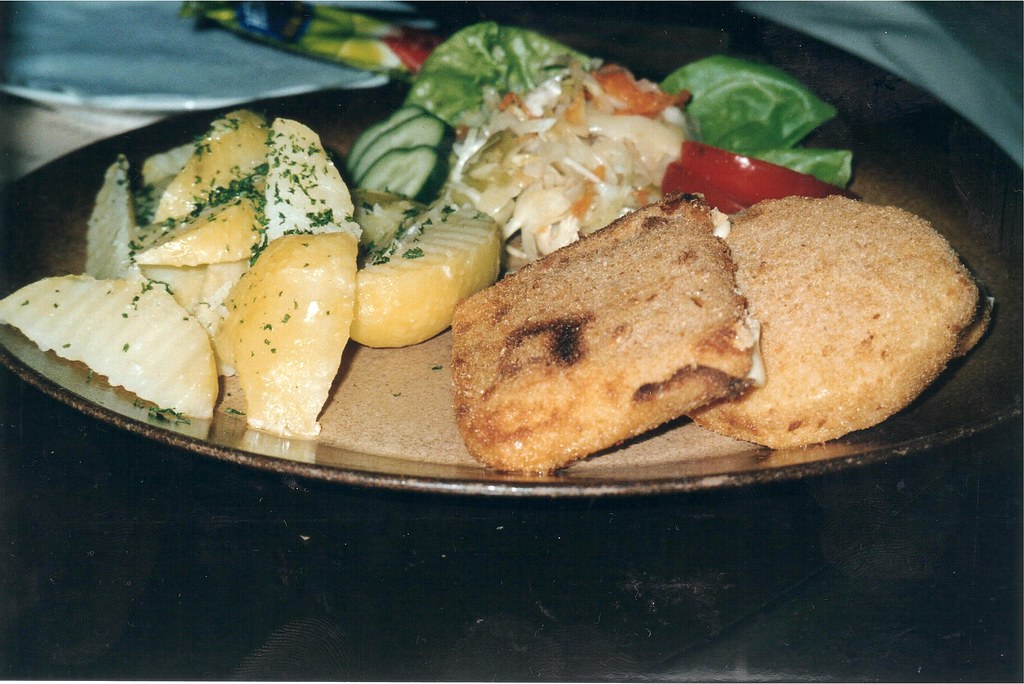
The old town hall has also left an impression on me, with its crocodile hanging from the wall at the entrance. As the legends say, the inhabitants of Brno have always thought it to be a dragon living somewhere in the surroundings, rather than a crocodile brought by an exotic visitor, perhaps a crusader or a Turkish sultan. I also remember eating smažený sýr (fried cheese) in a busy restaurant in the town centre, the most memorable meal I had in Czech Republic (or in Czechia, a term locals seem to prefer).

syr
Smažený sýr in Brno


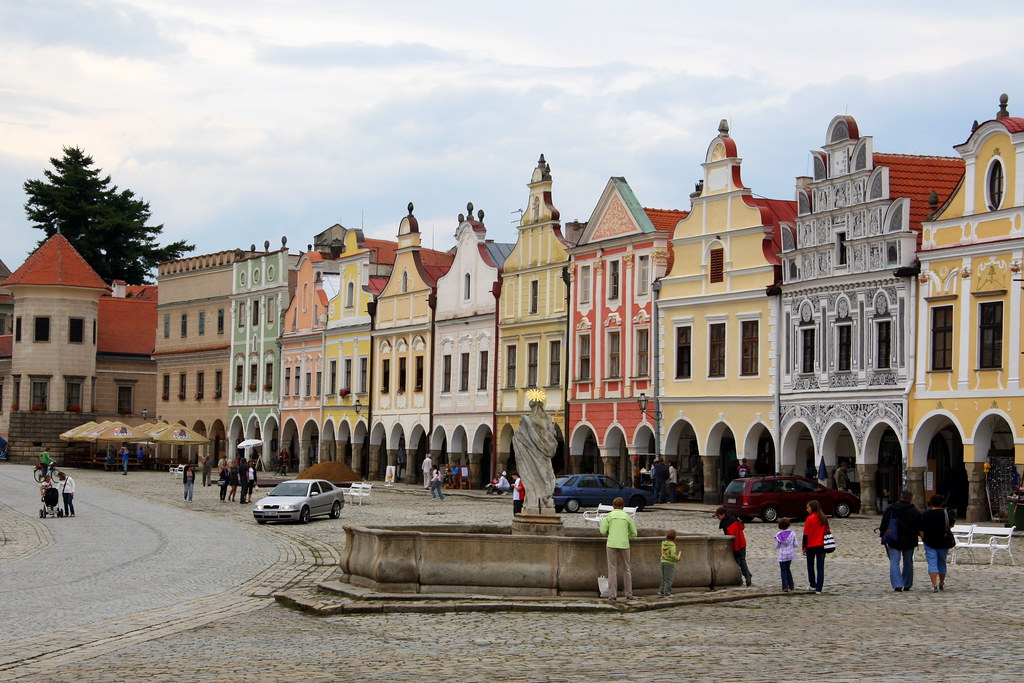
My friend also introduced me to other parts of her region. The place I liked the most and that I remember with a bit of nostalgia is Telč, which is a UNESCO-listed small town surroundedby a delightful lake. The main square is really cute, circled as it is by colourful Renaissance buildings and a portico with shops selling knick-knacks and souvenirs. There is also an English-style chateau that you can visit. More than read about the historical importance of this place, situated on a busy commercial route between Austria and Bohemia, however, the pleasure of being in Telč is all about the atmosphere. My friend Taňa's parents have a bed & breakfast in town, and I remember eating my salty breakfast in the morning. One of the things travellers have a hard time adjusting to, someone remarked on that occasion, are different breakfast habits. In Italy, for example, we always have a sweet breakfast, never salty.
 
Telc Town Square
Beautiful Telc (photo by janlichterman, retrieved on flickr)
 
I also visited the castle of Lednice, very close to the border with both Austria and Slovakia. Although I have visited quite a few castles in my life, I still remember a room decorated with blue wallpaper and a beautiful wooden spiral staircase. The cultural landscape of Lednice and Valtice is a landscape park built in the 18th and 19th century by the House of Liechtenstein, and it's often called the Garden of Europe. As a matter of fact, the family that gave its name to the small country had possessions in all of central Europe. Lednice and Valtics are located in a vast area with two castles, and many pavilions, ponds and things like that. Photographs were not allowed inside the castle, but I managed to retrieve one from flickr.
 
Lednice. Schlossbibliotek mit Holzwendeltreppe
The wooden spiral staircase (photo by Alexander Szep, retrieved on flickr)


 Moravia is a region of caverns and gorges, so my friends and I had a trip to the Moravský Kras, the Moravian Karst. There are also some excursions down an impressive gorge to be done, but it needed a booking we didn't have. Unfortunately, the guided tour of the caves was in Czech, and my friends had to translate everything back into English. Most of the tourists in this area of the country were Czech, or from neighbouring Slavic countries. I wonder if this has now changed, or if tourists here are mostly local people.
 
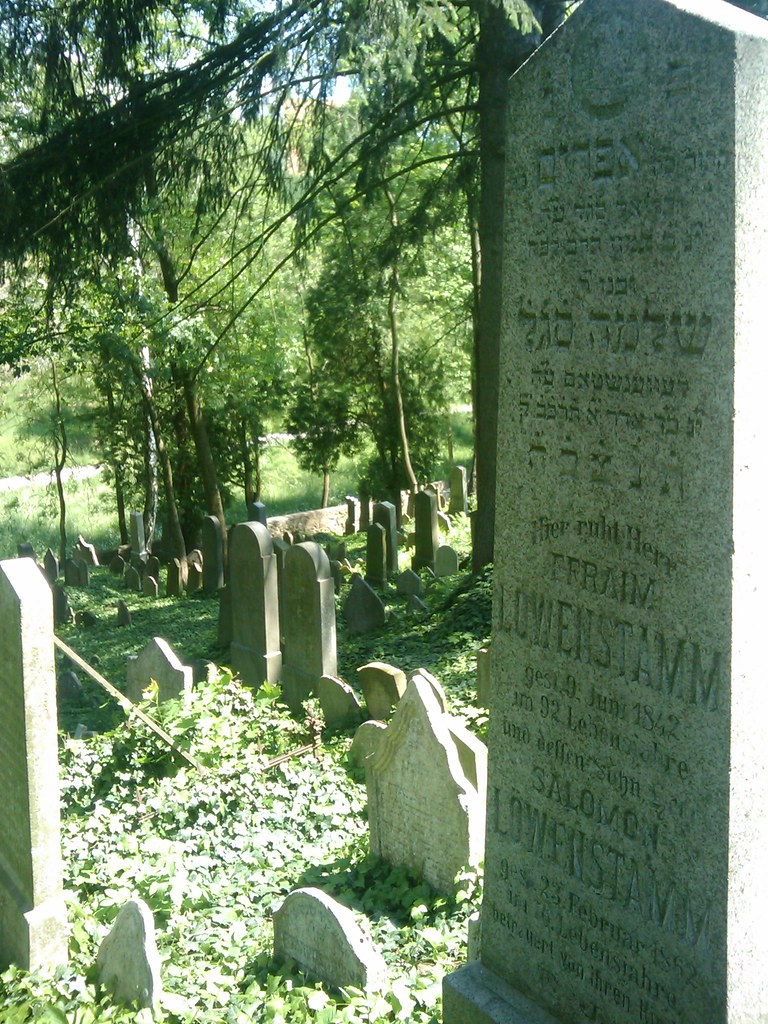
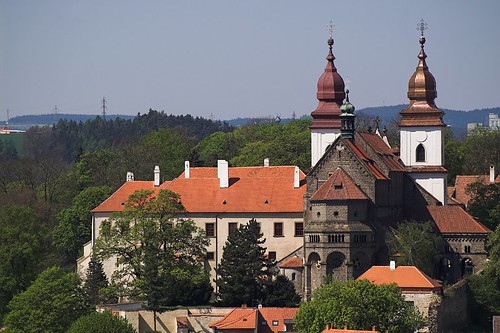
Another highlight of the trip was the visit to Třebíč, a village famous for its gothic basilica with its rose window, but also for its well-preserved Jewish quarter. The latter was a rather moving thing to visit: it was completely deserted, and so different from the lively Jewish area I am used to in Venice. The Jewish cemetery, in particular, was rather spooky, but fascinating. I am not used to seeing the tombstones written in Hebrew! I really felt the burden of a culture that has been lost, that of the Jewish people living in these areas of central Europe. Sadly, all the Jewish residents of this place have been deported during the Second World War, and there is none left. Another thing I noticed in this UNESCO-listed place is how much interaction there must have been between the Christian and the Jewish population of towns like Třebíč in the past, seen that the church and the synagogue were so close.

Trebíc 2009-05-21 12.42.55
Jewish cemetery (photo by Ana Paula Hirama, retrieved on flickr)


Trebic, St. Procopius Basilica
St. Procopius Basilica in Třebíč (photo by MareK Prokop on flickr)

In conclusion, I think this post proves that it's important to go off the beaten path, and explore lesser visited regions, especially in a country like the Czech Republic which always gets praised because of its capital, Prague, but sometimes receives little credit for the rest.

Friday, 17 January 2014

Paris in the winter?

I went to Paris last November. I knew it wasn't the best season to experience the city, and it would probably be cold and rainy, but the cheap plane ticket was very tempting, and after all there is so much to do in Paris even when the weather is not helping!
 
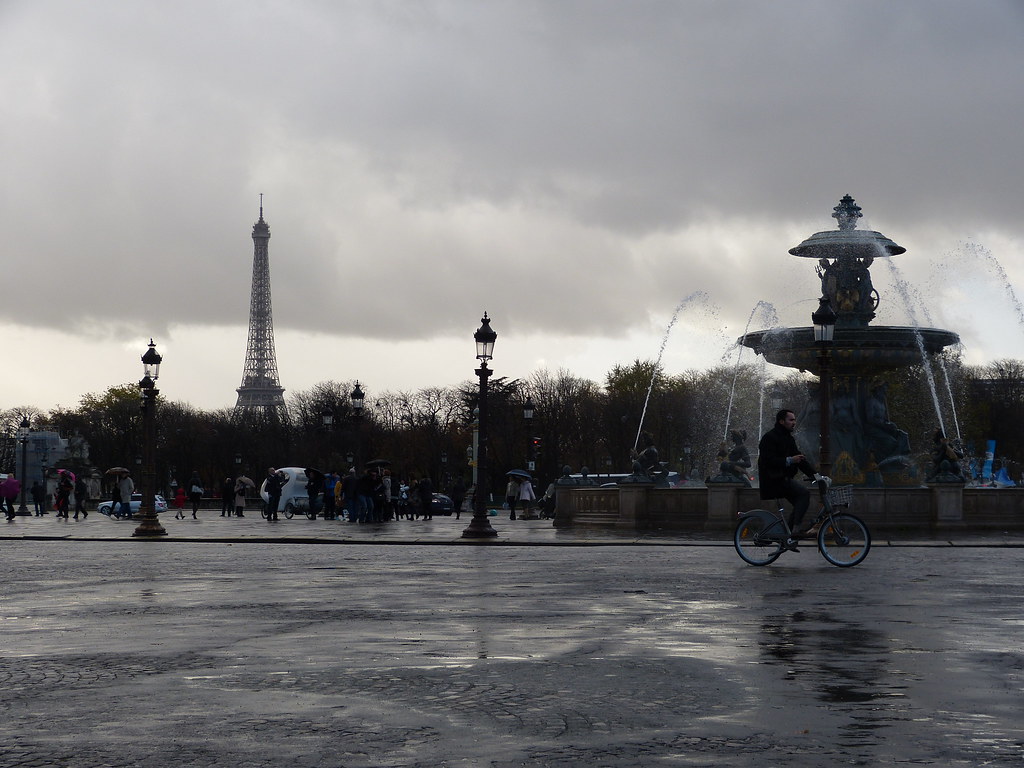
Paris in the winter
Place de la Concorde in the winter


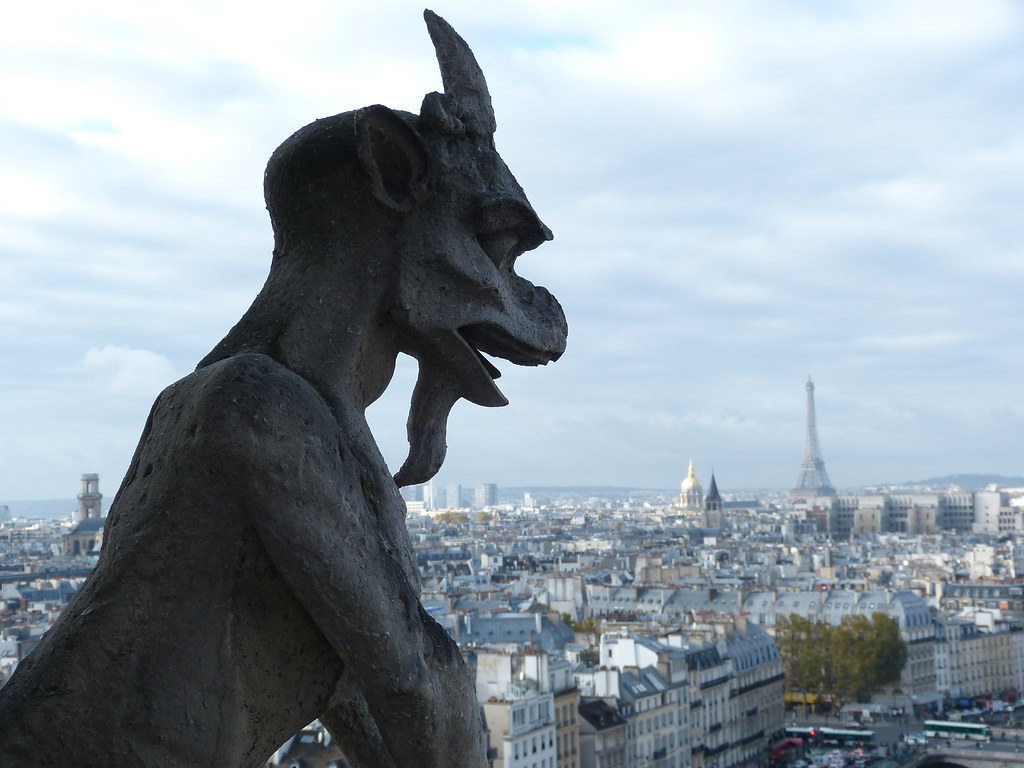
As you may know already, travelling in low season is a mixed bag. For example, it was an excellent idea in terms of the queues and the number of tourists on the street. As a matter of fact, I have been told that trying to enter Basilique du Sacré Coeur can be rather frustrating. In November, however, I entered the church without queuing and there were very few people inside it. It was the same for Notre Dame and Sainte Chappelle. I managed to enter 3 times  in Notre Dame  de Paris (it's free of charge) and climbed to the towers only the third time. The towers have different opening times from the rest of church, and the entrance is located somewhere else. I took me a while to find it out!


View from Notre Dame
View from one of the gargoyles in the towers of Notre Dame


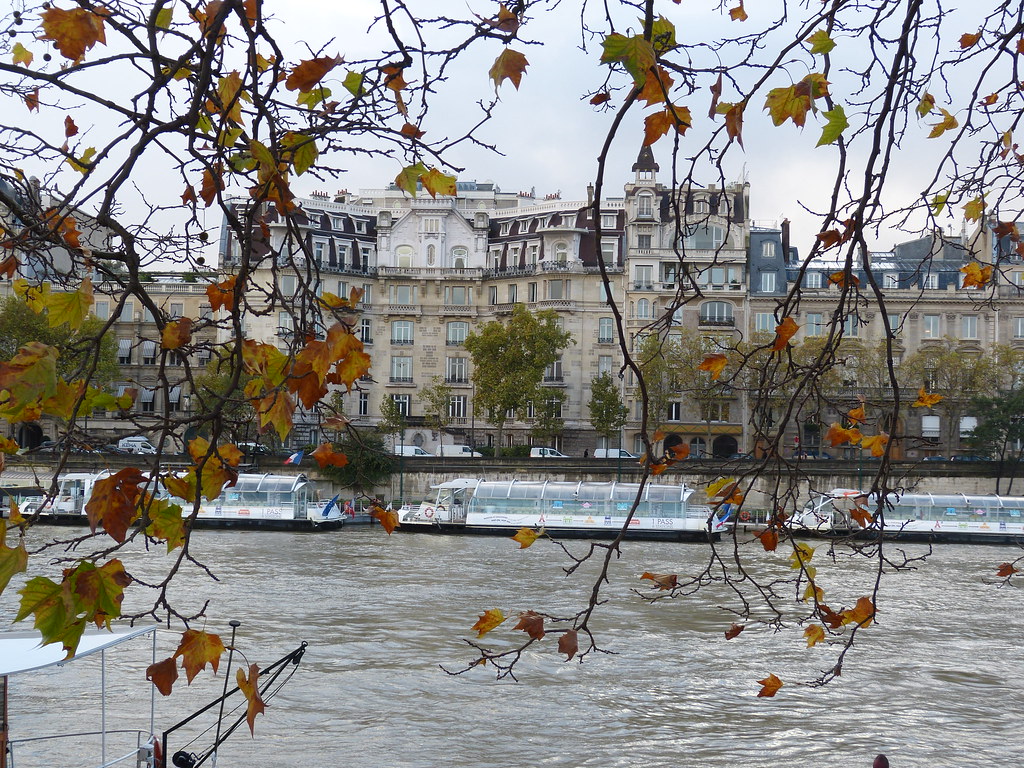
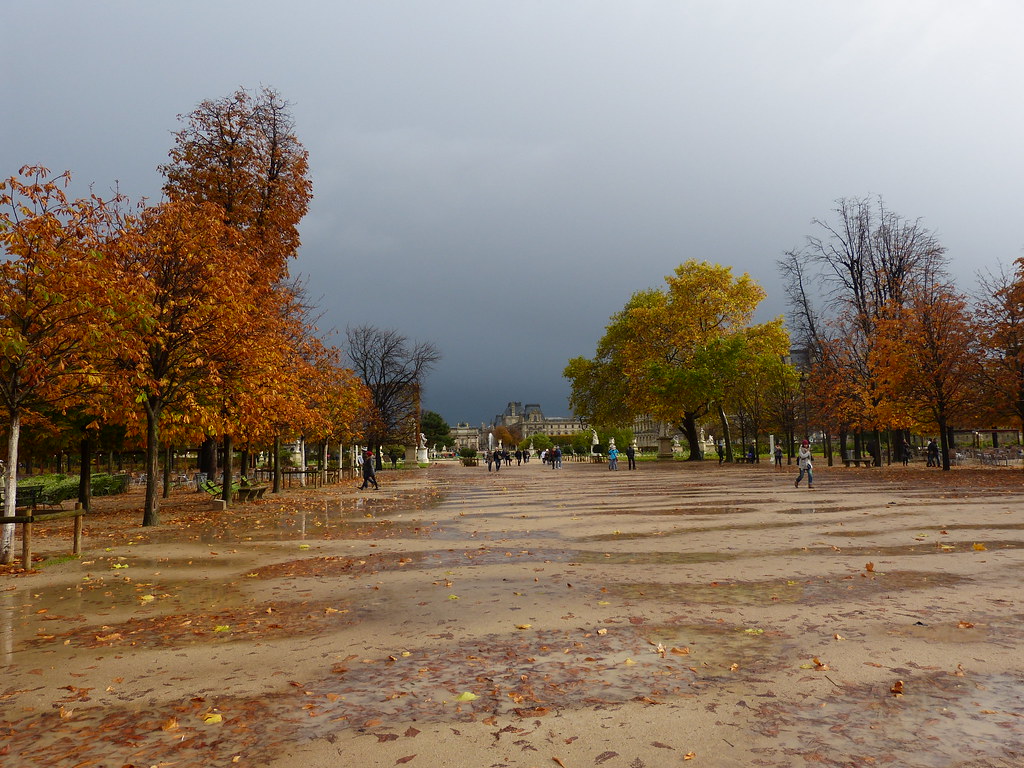
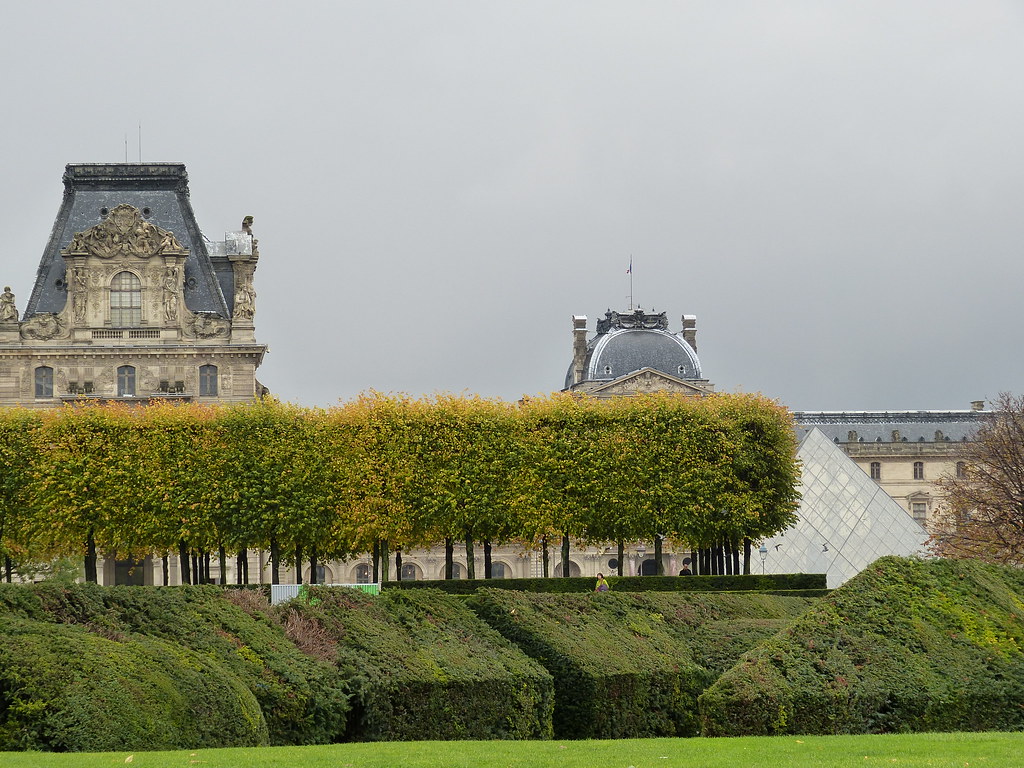
It was an even better idea for the colours: in November there were still some autumn colours to enjoy, especially at Jardins des Tuileries. I didn't find the downcast sky particularly off-putting, but on the contrary it offered opportunities for countless strange pictures.
 
Paris in the winter
Autumn leaves and the banks of the Seine


Jarin des Tuleries in the winter, Paris
Jardin des Tuileries after the rain
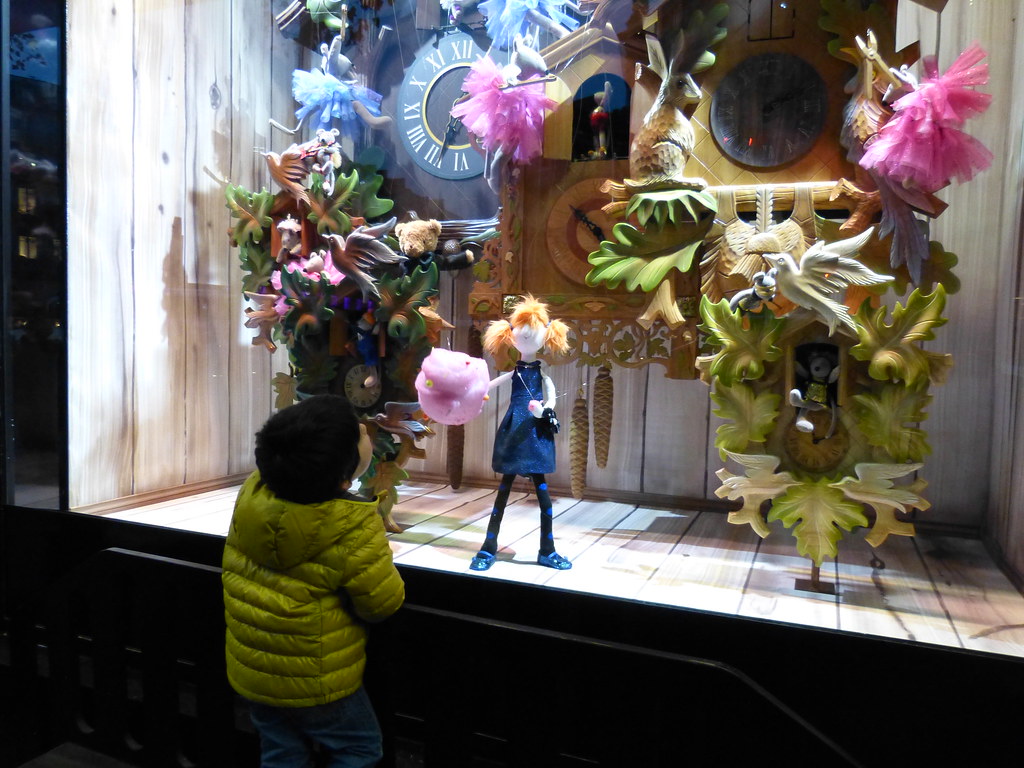
While the Christmas lights were not up on the Champs Elysées, Galeries LaFayette were all ready for the Christmas season! There were lots of kids marvelling at the animations in the shop windows, and hundreds of tourists wandering the shopping mall just to get a glimpse of the huge Christmas tree. I am not a fun of luxury goods, so I didn't buy anything in Galeries LaFayette, but I had a good time taking pictures of the main hall.

Christmas tree at Galeries LaFayette
Christmas decorations at Galeries La Fayette

Looking at the shop windows at Galeries LaFayette
Shop windows at Galeries LaFayette

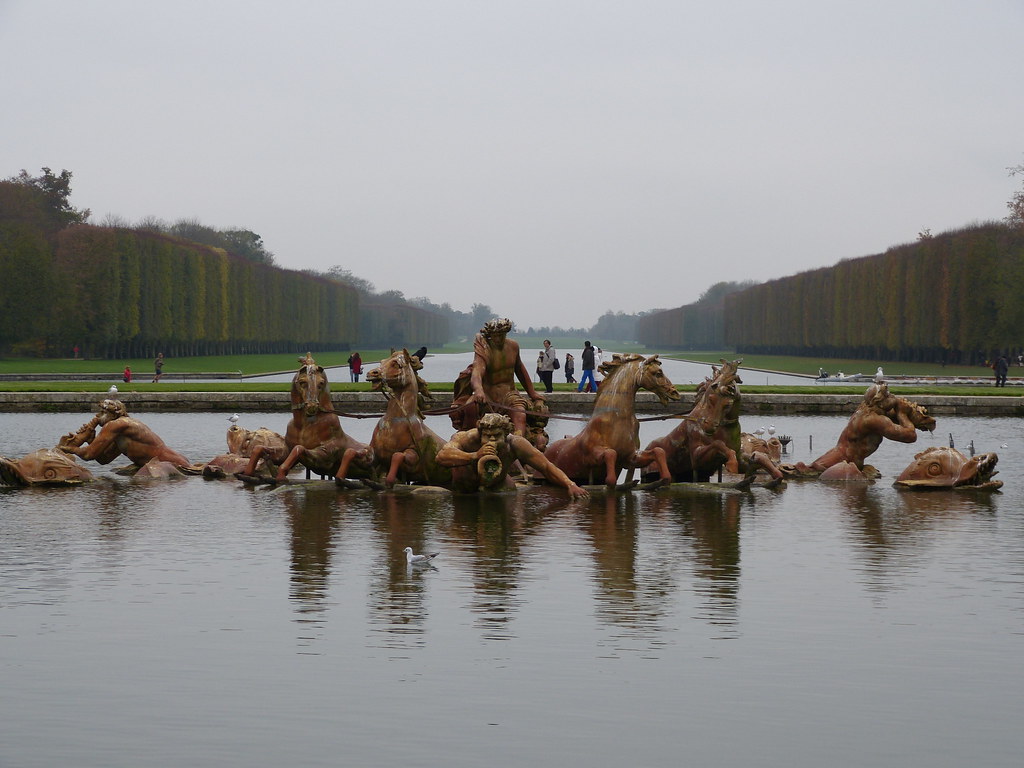
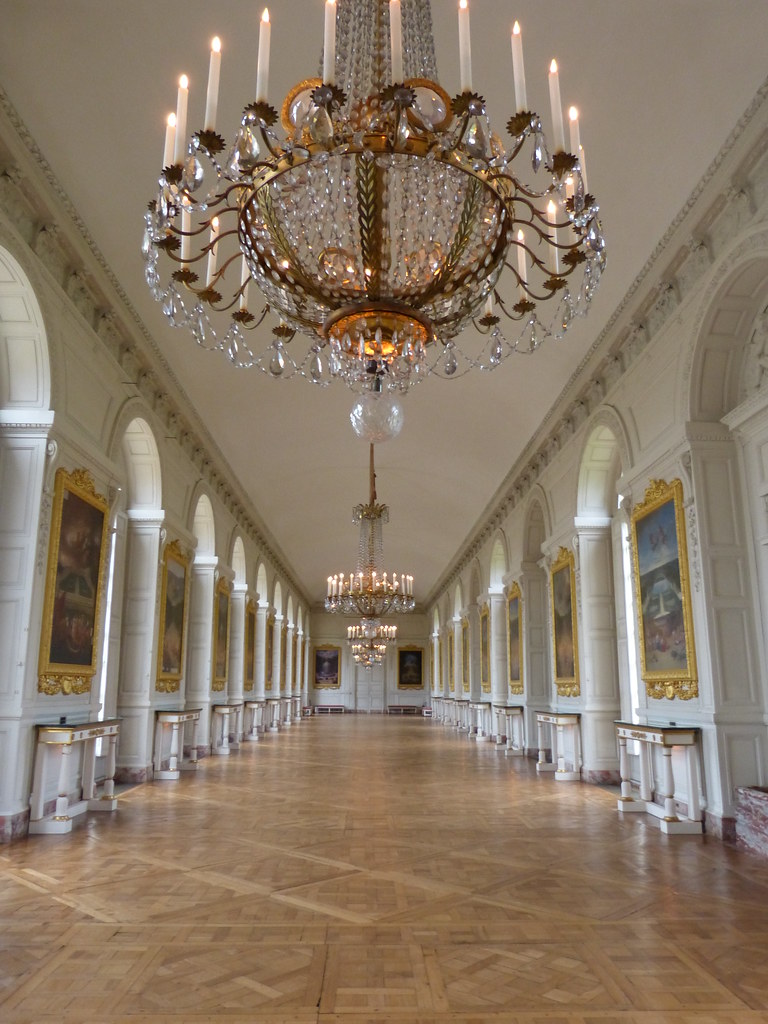
Going to Paris in November was a bad idea for one of the trips I was looking forward to, that to Versailles. Versailles in November was almost deserted (except from the hall of mirrors, where everybody seemed to congregate!), but I agree that it's a good thing. Nobody wants to share the view of carefully planned gardens with a million loud tourists who don't know a thing about French history, right? Going to Versailles win winter as nonetheless a disappointing experience: many fountains were closed, the statues in the garden mostly covered, and my friends and I inadvertently chose the coldest day to be there. Walking through the gardens was tiring, even though the colours were beautiful, and after visiting the Grand Trianon, we were too cold, so we gave up and decided not to visit Hameau de la Reine, which I wanted to see very badly.
 
Fountain Versailles
Main Fountain at Versailles

Grand Trianon, Versailles
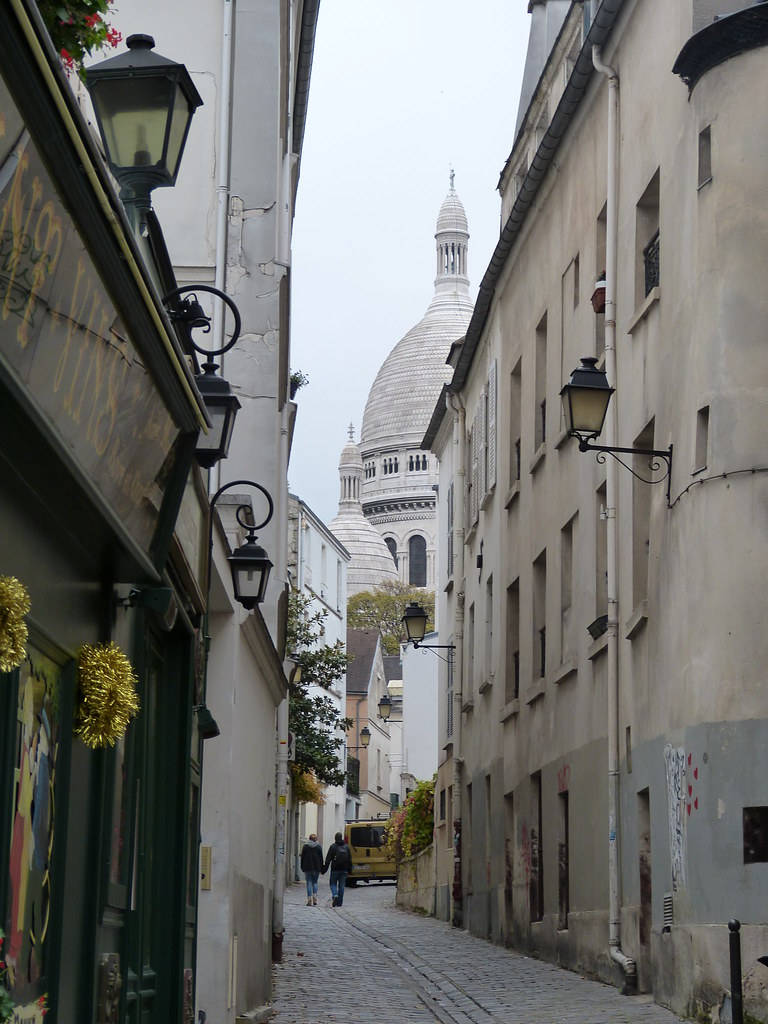
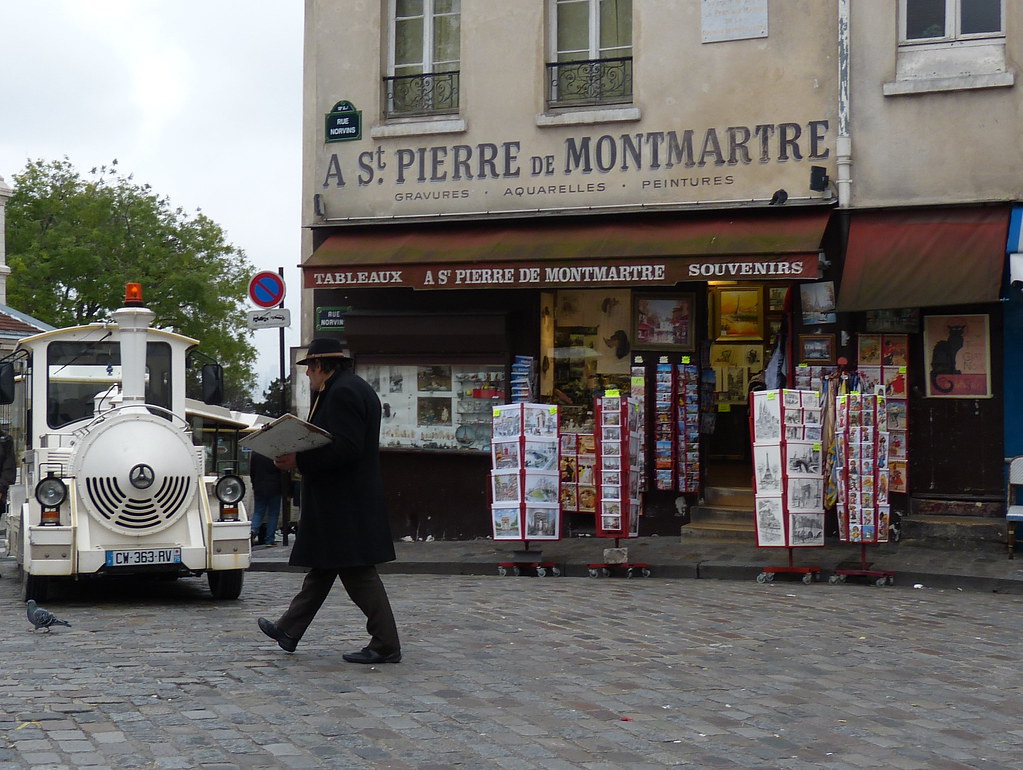
Montmartre was almost devoid of tourists, and there were no artists at the bottom of the Basilique du Sacré Coeur. I loved Montmartre, and it was in fact one of my favourite neighbourhoods of Paris, but I am sure that it will be even more picturesque when it's bustling with life, but maybe not too much, as too many people will spoil the atmosphere. I loved that the area still feels like a village in the countryside, rather than a  neighbourhood in one of the most cosmopolitan cities in the world.

Mont-Martre
Basilique du Sacré Coeur

Pittore, Montmartre
Sketch artist in Montmartre

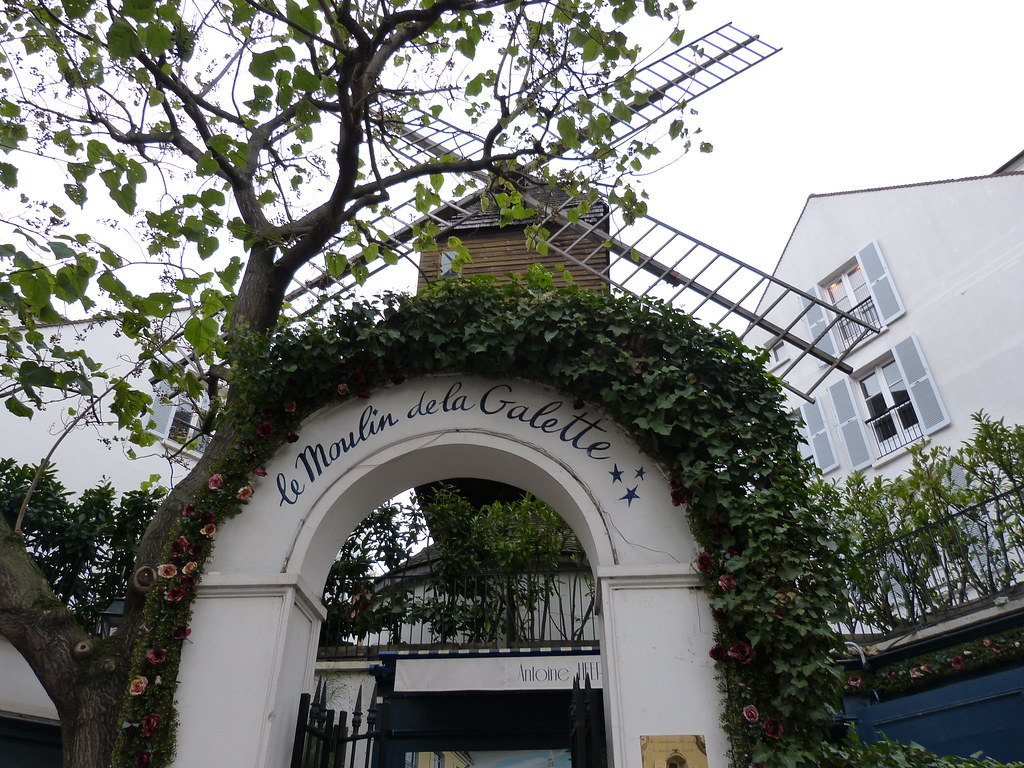
Walking in the footsteps of Toulouse-Lautrec and Renoir, two of my favourite French painters, was thrilling. I went in search of the two surviving winding mills in the area, and when I arrived in front of the Moulin de la Galette, site of the famous guinguette (a typical drinking establishment of the past) portrayed by Renoir in the famous painting, I could not help but snap a picture and wonder how Montmartre might have been back then.


Moulin de la Galette, Montmartre
Moulin de la Galette, Monmartre


While museums were full of people, the streets were free to wander and Parisians were definitely the majority almost everywhere. In conclusion, there are certainly good reasons to go to Paris in November, but I'm willing to try this city in every season!
 
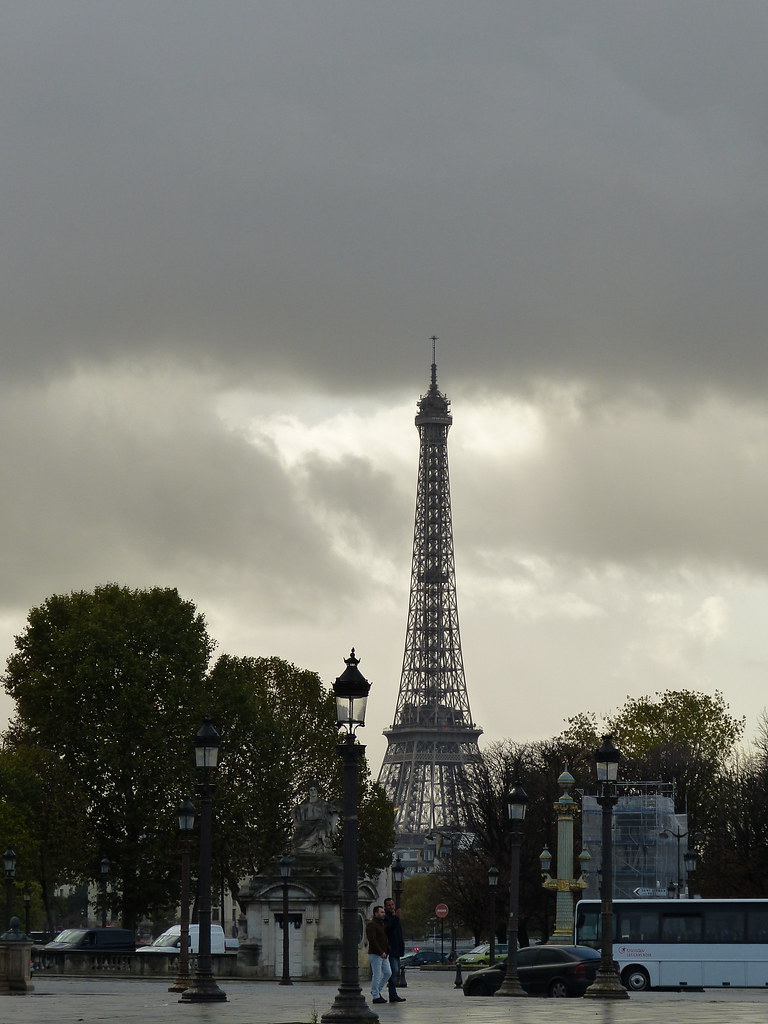
Torre Eiffel
Tour Eiffel and the clouds
 

Sunday, 12 January 2014

Day Trips From Venice: #2 Vicenza

Vicenza is another city less than one hour away with the train from Venice. It is worth paying a visit, and not only to try its delicious baccalà alla vicentina, cod that is slow cooked and usually served with polenta.  From Venice, your best bet is to take the regionale veloce, which costs 5,25€ one way and takes 45 minutes (cross your fingers that there will be no delays!). The city centre is in close proximity to the train station. Just walk straight, and when you reach a medieval-looking tower turn right. Right in front of you there is Corso Andrea Palladio, the main street of the city, lined with shops, gelaterias and bars.

 
Corso Palladio, Vicenza
Corso Palladio

Vicenza is famous for being home to many of the works by Andrea Palladio, the famous 16th-century architect. His influence is enormous: buildings as far as Delhi or Washington draw on his style. The city is also listed as a UNESCO world heritage site thanks to its great architecture. I went there on a chilly winter day in order to explore it and then write this post.

Wednesday, 8 January 2014

Museums in Paris aren't just museums

Whether you are a fan of French impressionism or whether you don't care for paintings and rush to the Egyptian section of major museums, Paris holds something for you, that's for sure! And even if museums bore you to death, you can still admire their astonishing architecture, or eat in one of their hyper-chic (and expensive) cafés.
 
During my last stay in Paris I visited several museums. I bought the Paris Museum Pass, with which I saved about 20€ on my entrance fees. The entrance to Versailles alone costs 18€! This card is not cheap (56€), but it allows you to enter almost every museum and church in Paris and in its surroundings - including Versailles and the Louvre - during 4 consecutive days. There is also a 2-day version of this card (42€). There was a price change from January 2014, so I'm reporting the new prices. If you intend to see lots of museums, and if you are worried about the queues, this card may really help you. With it you make the investment at the beginning of your 4 days, and after that you won't have to think whether to enter or not that museum you just passed by: if you have time, why not? It's free for you, and if you don't like it, you can quickly exit and go on with your tour of the city.

Sainte Chapelle, Paris
Sainte Chapelle, one of the many attractions included in the Paris Museum Pass

I suggest that you visit one big museum per day and spend the rest of day exploring the streets of Paris, perhaps visiting a church or having a long lunch, savouring some French food with a glass of wine on the side.
 
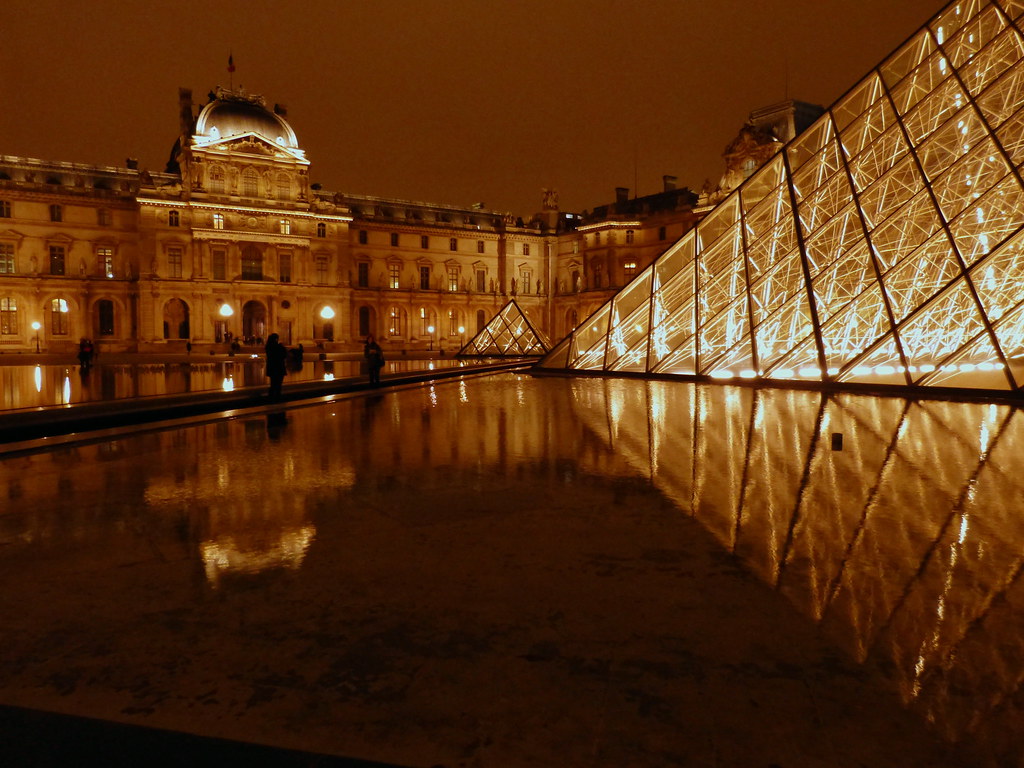
1) Musée du Louvre. The most famous of Parisian museums is hosted in a former royal palace of French kings. As a matter of fact, before Versailles was built, this was the residence of the kings and queens of France. This is by itself an excellent reason to visit the Louvre! Moreover, the famous Louvre pyramids (there are four, one big and three smaller), although built only a few years ago, in 1989, have become a symbol of Paris.


Louvre Pyramid
The famous Louvre pyramid seen from the Tuileries garden

Don't miss the beautiful light of the sunset near the pyramids. I really need to work more on my photography skills, because I couldn't capture the light well enough, but I still cherish the experience of that Parisian sunset. Admission is 12€: not too much considering the amount of famous and astonishing stuff you can see in here. The big hall from where you can access the wings of this huge museum will leave you speechless. Apart from that, you can see the medieval foundations, you can admire the rooms of Napoleon III and, of course, see the Monna Lisa and many other important paintings.

Louvre pyramid
Louvre Pyramid after sunset


One day is not even enough to see it all, and even with the plan, I got lost. Endless stairs, corridors, wings and elevators frustrated me, but you'll be rewarded when you'll see that painting or artefact that you have been dreaming of for years. In my experience, I wanted to see Vermeer's paintings, but I just couldn't find them! Every time I thought I was in the right wing of the right floor and in the right corridor I was wrong! To save a few euros, exit the museum for lunch: the food inside is pricey and you can always re-enter because a ticket for the Louvre is valid for the day. A good option is a Korean restaurant in Rue Sainte-Anne.

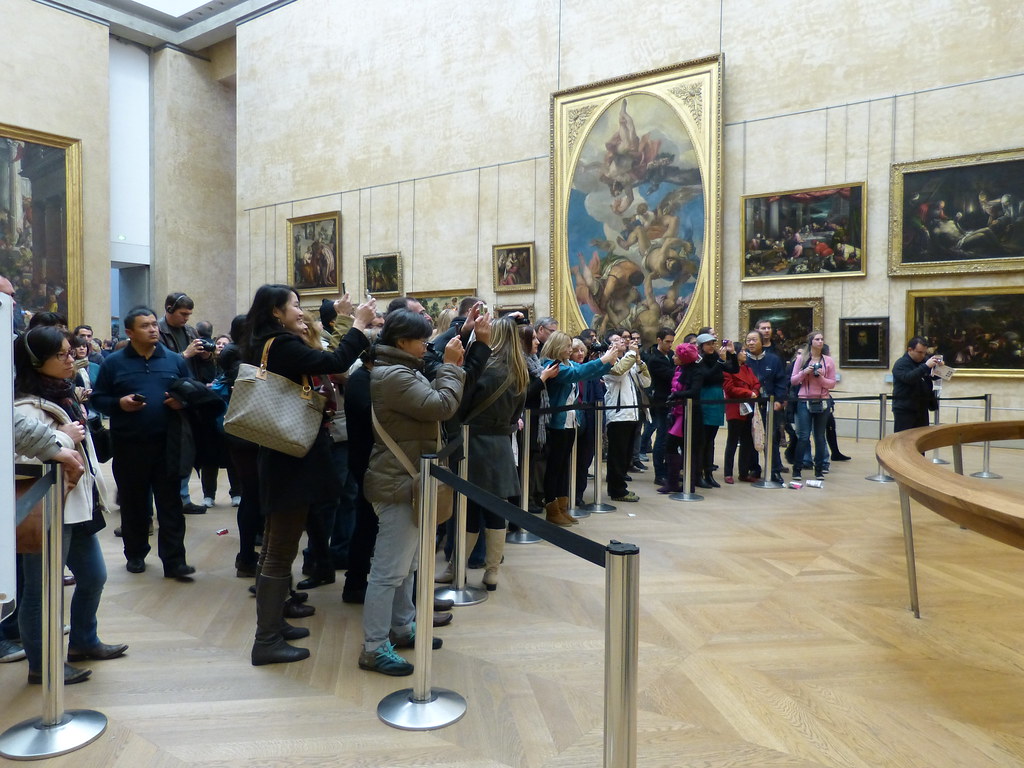
Just remember that in front of the most famous things - like the Monna Lisa or the Venus of Milo - there are many tourists taking pictures, making the experience less pleasant and somehow ruining the link you should have with the artefact. This is for instance a picture of said situation in front of Monna Lisa, on a not-so-crowded November day. I can't imagine what's the situation like in July and August! You can't get near the painting, which is really small, and all the rest of the room gets ignored. Just in front of Monna Lisa, for instance, there is "The Wedding at Cana" by Veronese.

Taking pictures of Monna Lisa
People taking pictures of Monna Lisa

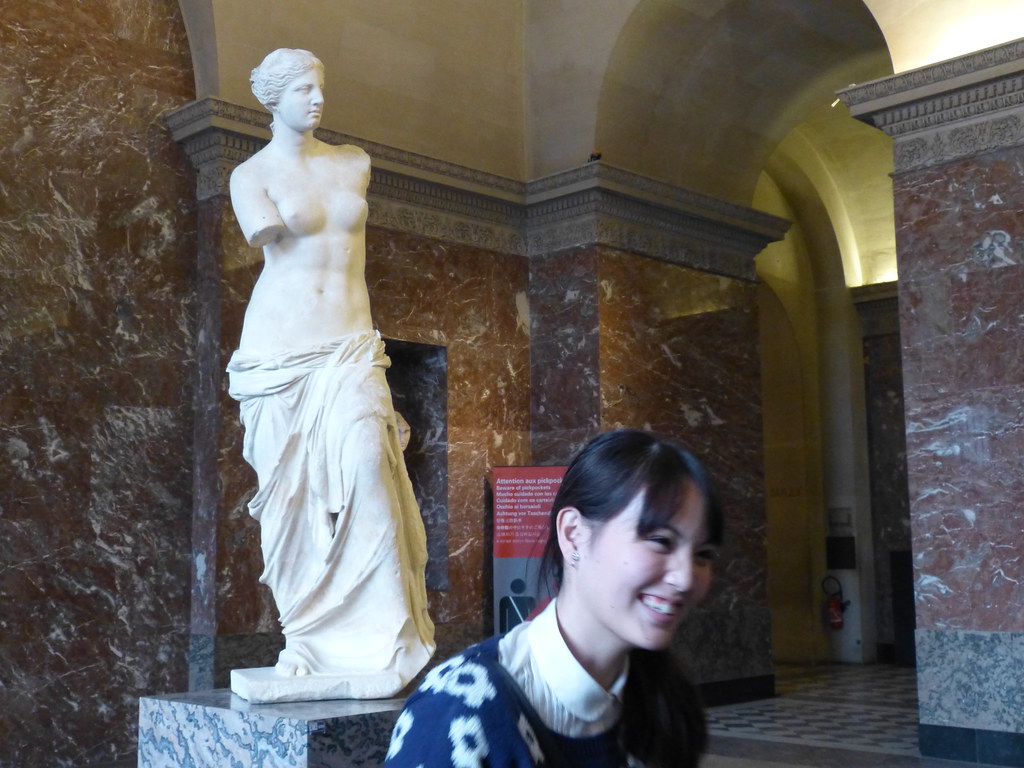
My picture of the Venus of Milo almost comically became a picture of a girl having her picture taken in front of the famous statue. It's a cool picture anyway, and it explains how little one-to-one "talk" you can have with the artefacts at the Louvre.

Girl posing in fron of the Venus of Milo, Louvre Museum
Girl having her picture taken in front of the Venus of Milo
A little delight during my visit was seeing this painter trying to reproduce "The Virgin of the Rocks" by Leonardo da Vinci. I've never seen a real painter, with canvas and palette, in any other museum in the world, have you?
 
A painter at the Louvre
Painting the Virgin of the Rocks by Leonardo

 
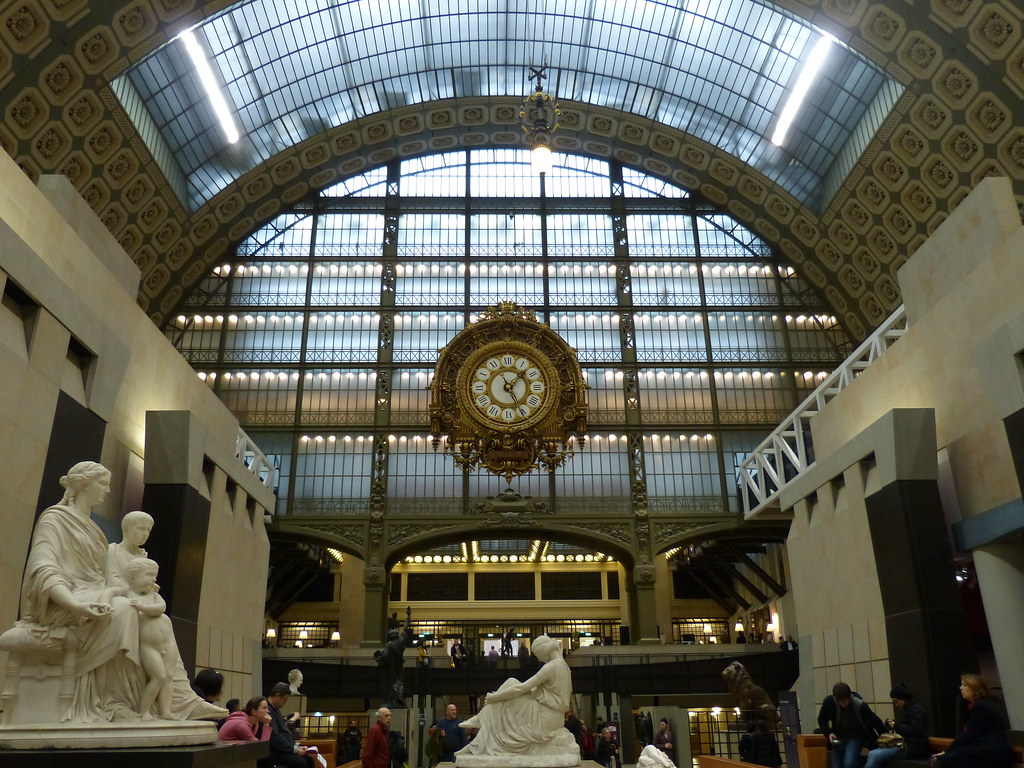
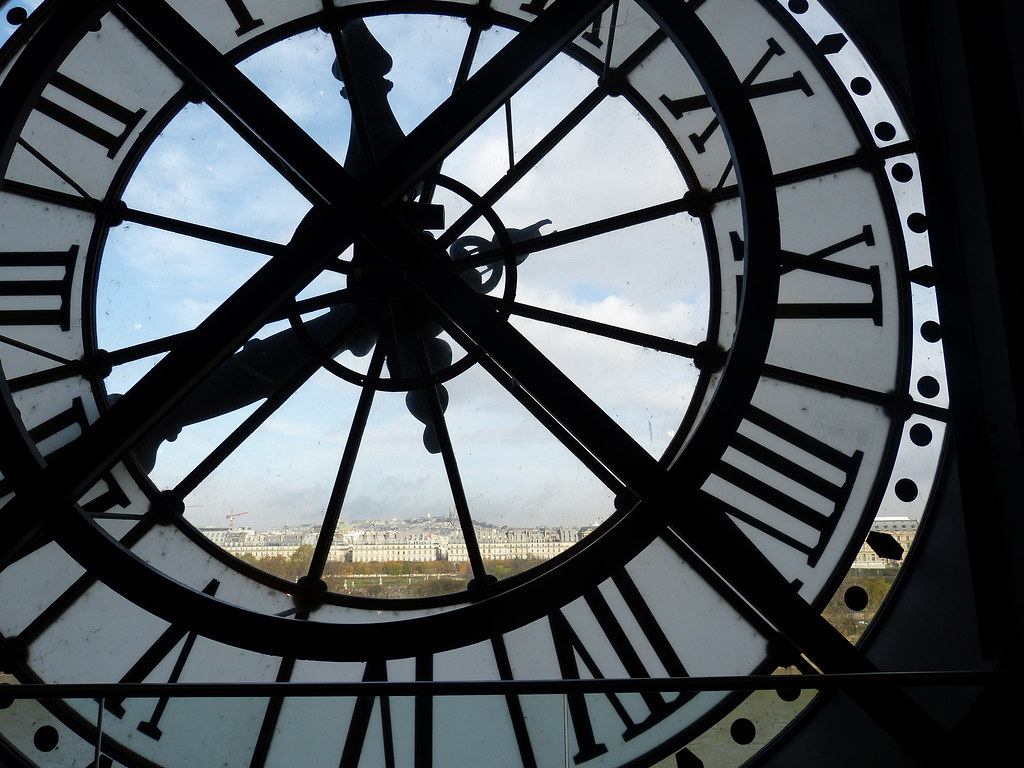
2) Musée d'Orsay. This museum was built inside a train station, when the railtracks here became obsolete for the newer trains France had in mind. The setting is spectacular: you'll peer at the UNESCO-listed banks of the Seine from behind giant clocks, eat in designer restaurants, see world-class exhibitions disposed in a perfect way, making for excellent photo opportunities.

Musée d'Orsay, big golden clock
 
Musée dOrsay, restaurant
Eating at Musée d'Orsay
This is the building that fascinates me the most of the three, and it hosts some of the artists I love, including Renoir and Degas. I also discovered new artists, and it was easier to skip the sections I wasn't interested in. Admission price is 9€, but remember that young people aged 18-25 from EU countries enter most museums in Paris for free!

Musée d'Orsay, giant clock
Looking out of one of the giant clocks

 
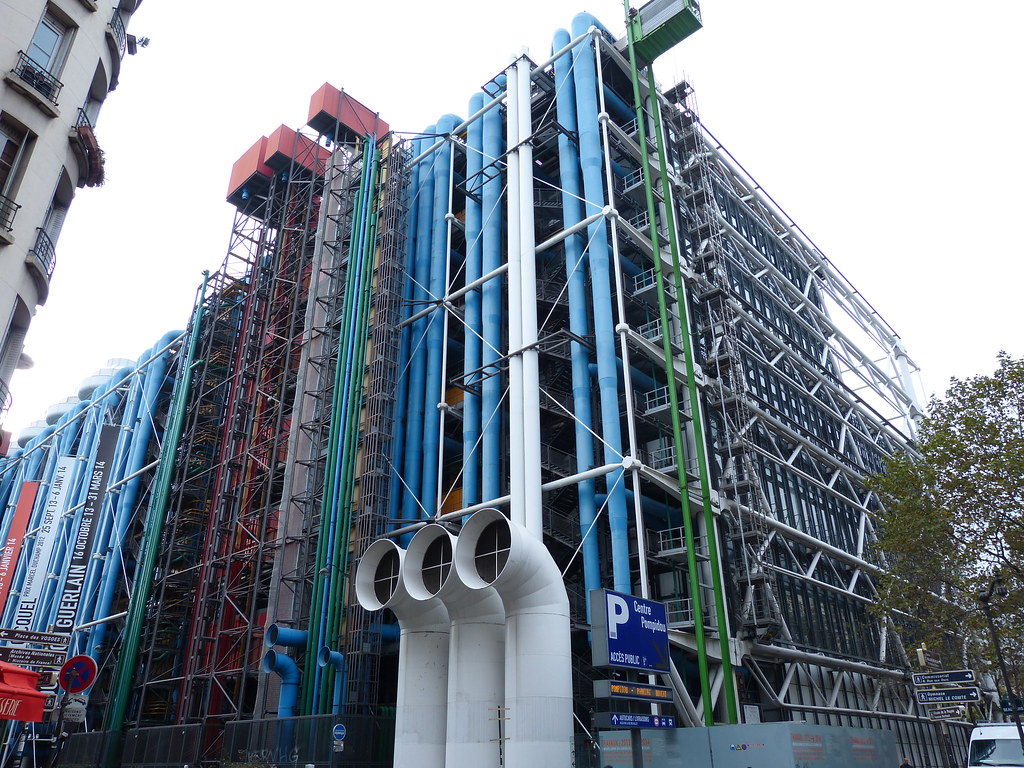
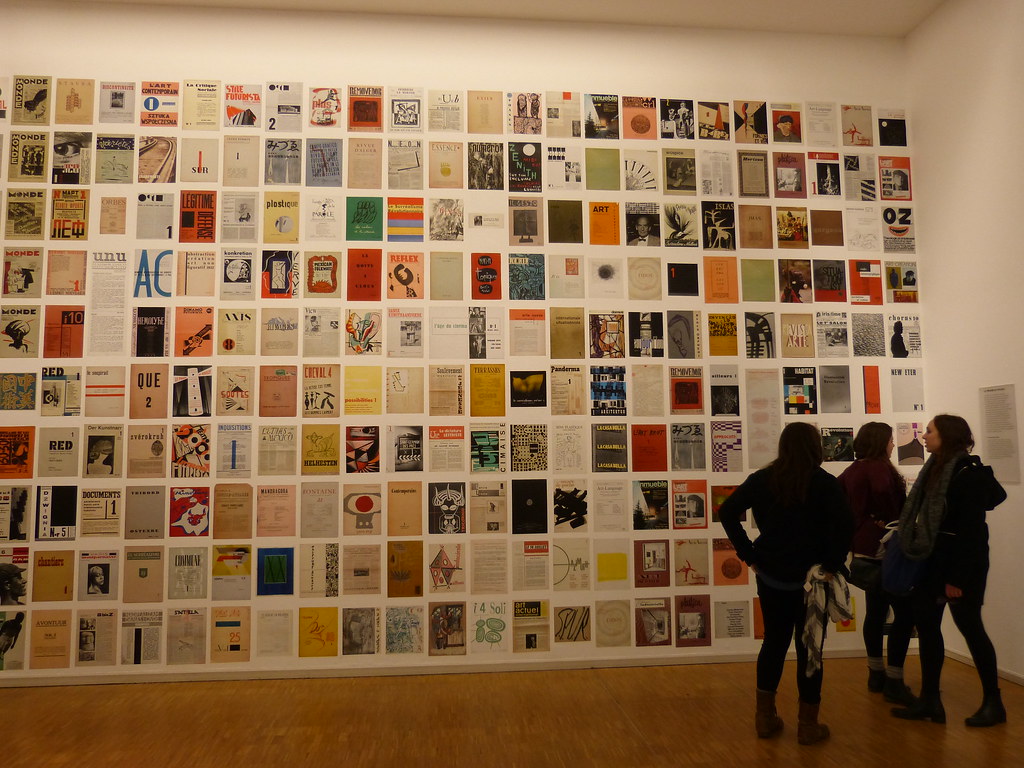
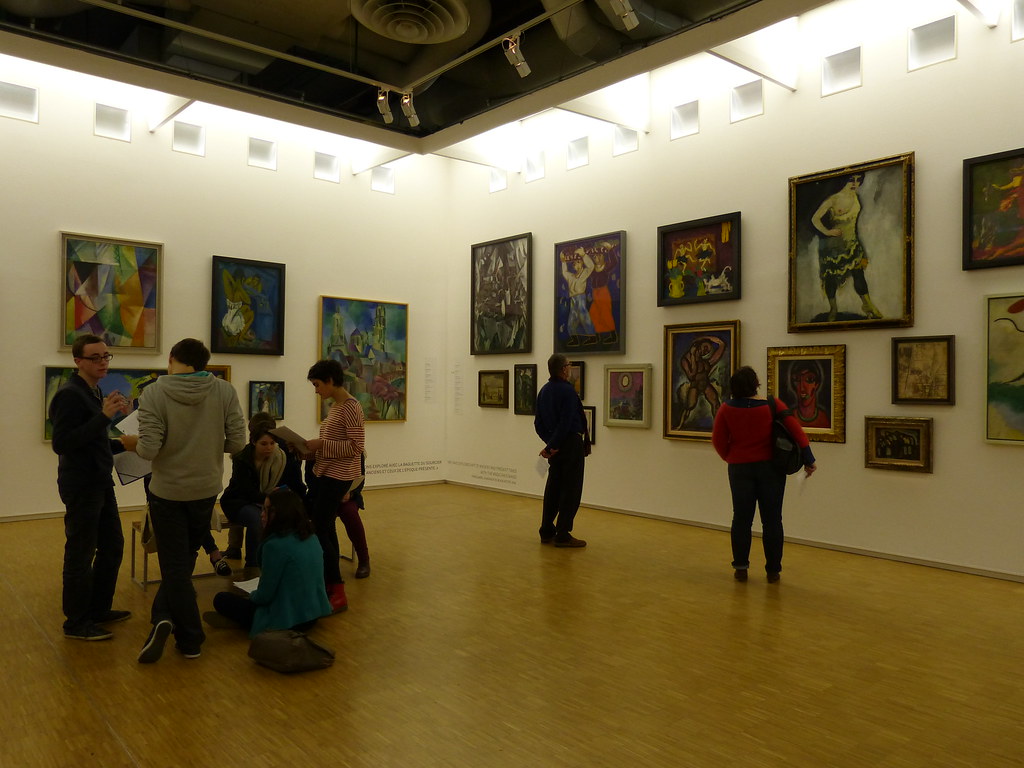
3) Centre Pompidou. The building, designed by Renzo Piano and other famous architects, juts out of the urban landscape with all its colourful tubes and, in spite of the fact that it was frowned upon at first, it is now a favourite among both Parisians and tourists. The disposition of the main exhibition might be a bit confusing, but if you're into contemporary art and installations, this is the place to go. Centre Pompidou is a cultural centre, with a library, a bookshop, minor art exhibitions and cafés.

Centre Pompidou
Centre Pompidou

 
Centre Pompidou, Paris
Centre Pompidou
Centre Pompidou, Paris
Centre Pompidou
Do you like museums? Which museum would you like to see best if you find yourself in Paris?
01 09 10